KALEDEN IRRIGATION DISTRICT HISTORY - by Mike Gane
Excerpts for this history taken from “History and Development of the Kaleden Irrigation System” by W.E. Lane, Secretary Treasurer of the Kaleden Irrigation District (1957) and “The History of Kaleden” by H.W. Corbitt (1967/1971)
To know the history of the irrigation district, one must understand the early history of Kaleden.
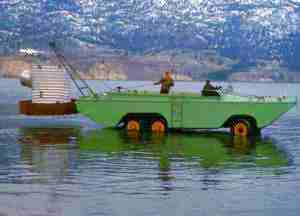
My family moved to this lovely village in 1960 in a WW2 DUKW. More on the DUKW later!
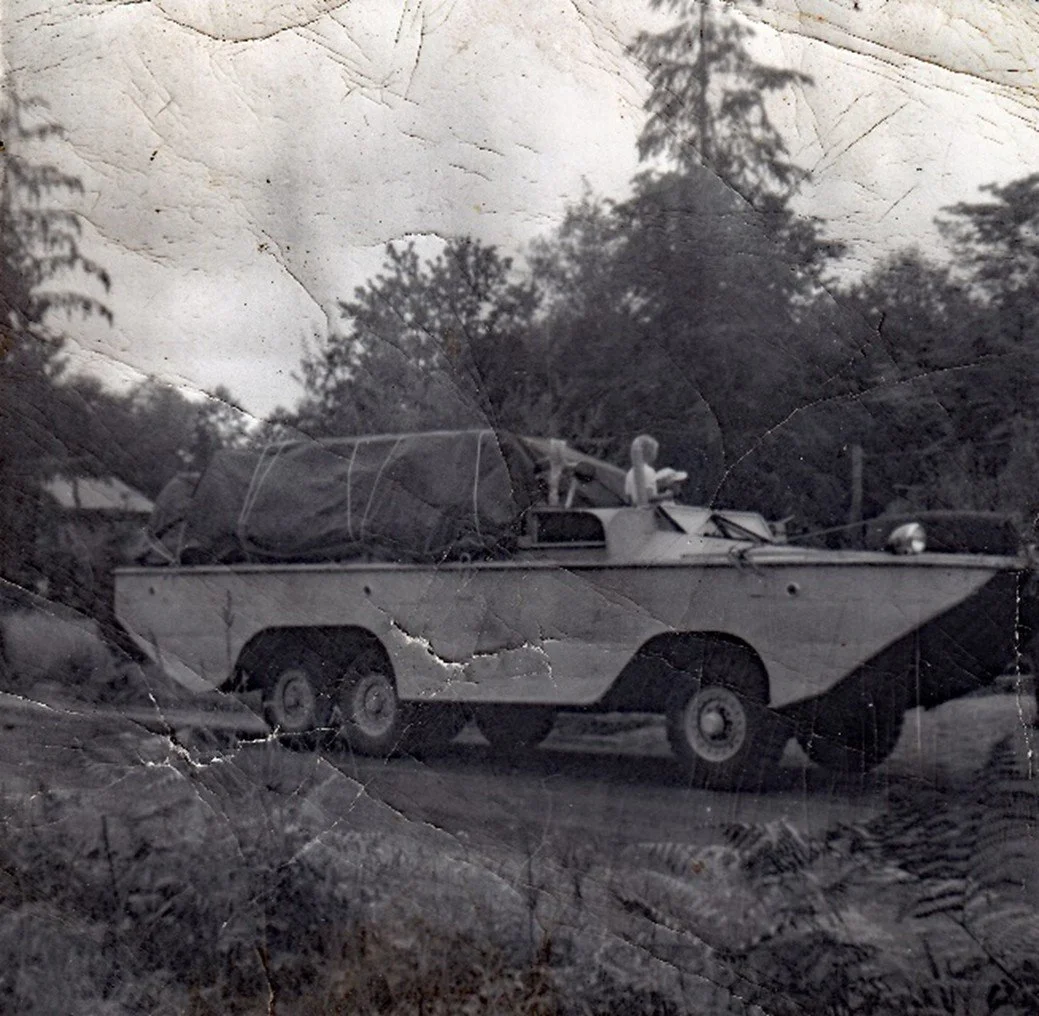
1944 DUKW loaded and ready to leave for Kaleden.
A History of Kaleden:
In 1905, James Ritchie, the developer of West Summerland, was searching for new opportunities in the South Okanagan. Ritchie looked across the parched hills on the western shore of Skaha Lake and visualized orchards that could materialize if water were supplied. Over the next year he and family members purchased some 3,000 acres including 1,078 acres from Warwick Arnott for the sum of $1000. That $1000 is worth $32,600 in today’s dollars. By 1908 plans for subdividing and construction of an irrigation system were well underway.
Up to this time Ritchie's new development had been given no name but in the spring of 1909 a contest was held and on April 24th the winning name "Kaleden" was chosen. It had been suggested by Rev. Walter Russel of Toronto who combined the Greek word "Kalos" meaning beautiful, with the name of the Biblical orchard. The prize—a lot in the new townsite.
Thirty-five prospective buyers deposited a sum of $50 with Mr. Ritchie for each five acre blocks they wished to purchase, which were sold on a first come first serve basis. From that point on, lots were sold for $240 per acre plus the cost of water shares at $80 an acre, raising the cost from $50 to $1800 for a 5-acre block.
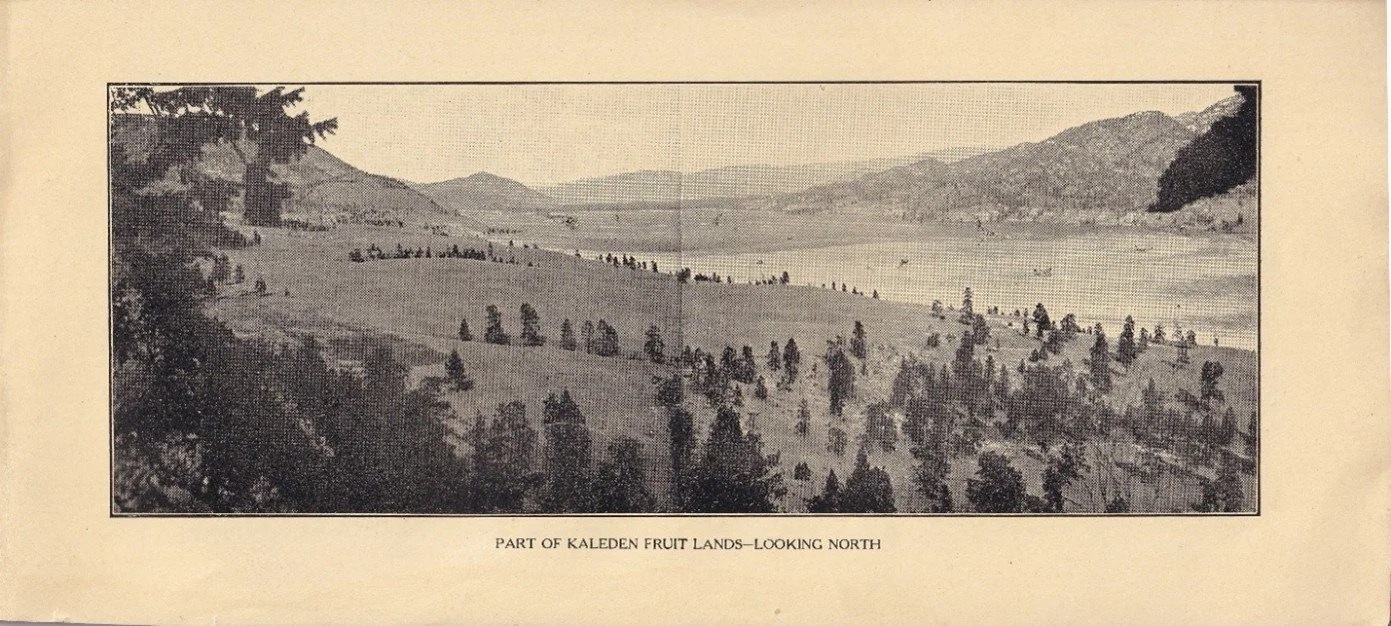
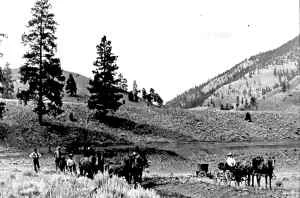
This picture is from a 1909 sales brochure for Kaleden.
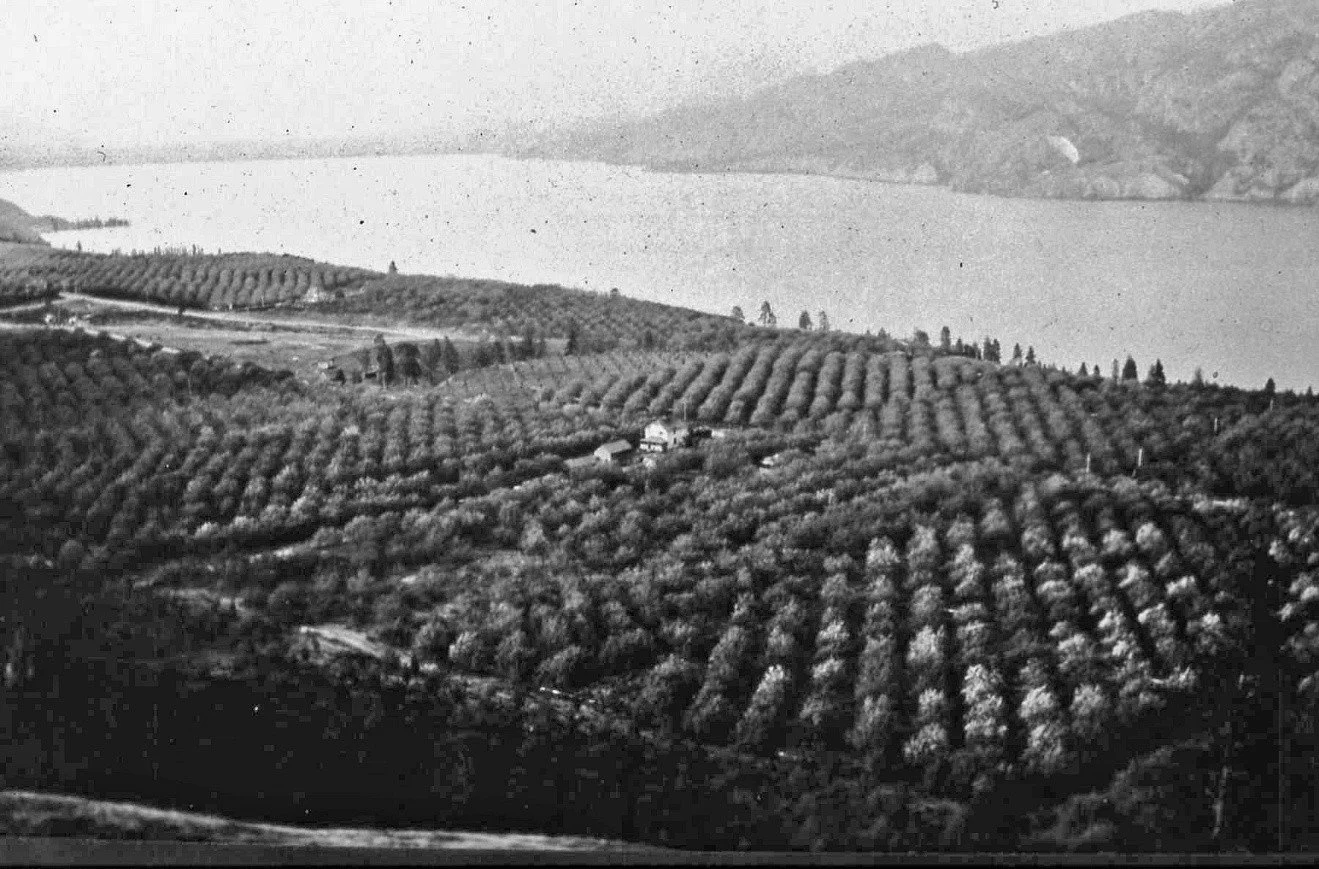
Roughly the same view circa early 1940’s
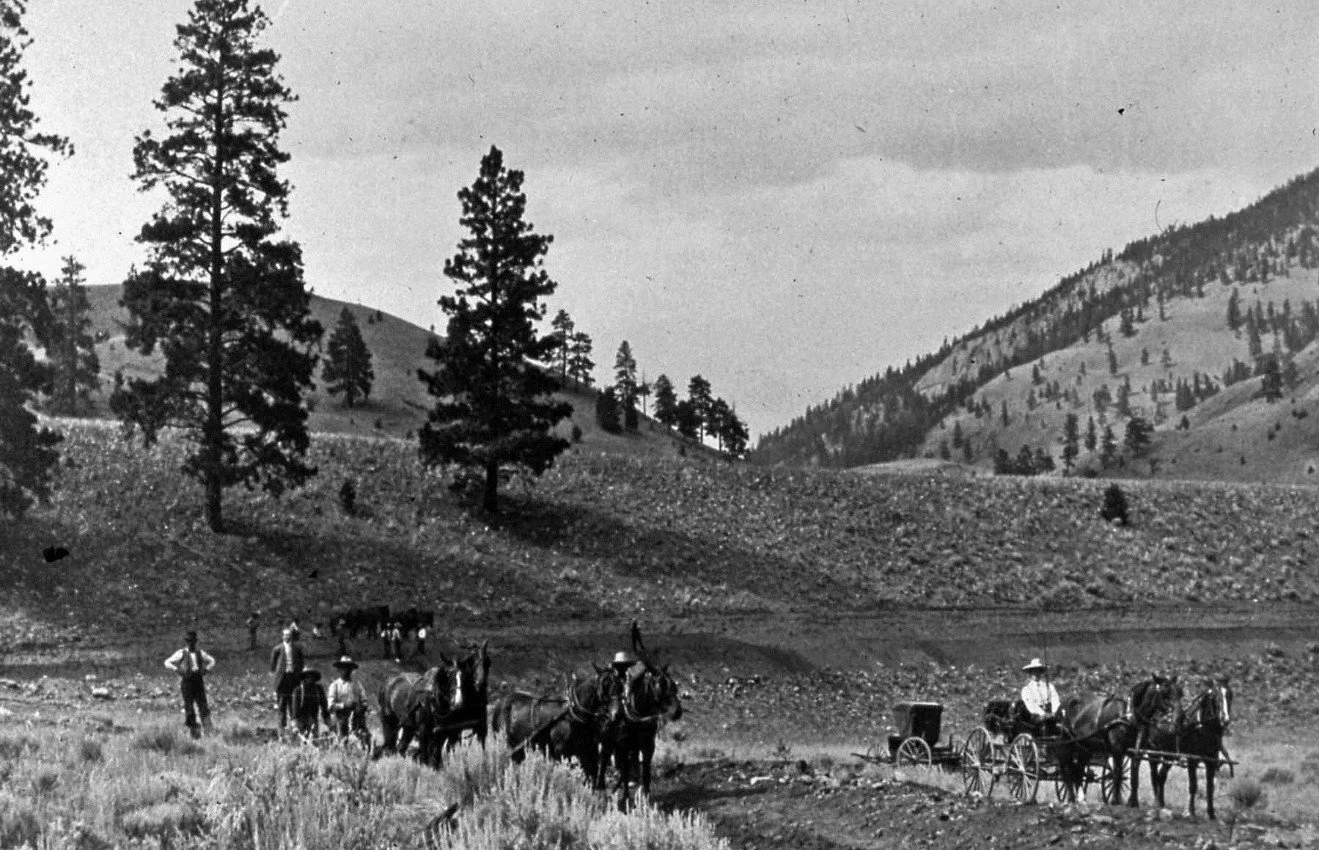
James Ritchie inspecting the irrigation works. Circ 1909/1910
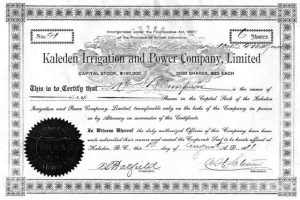
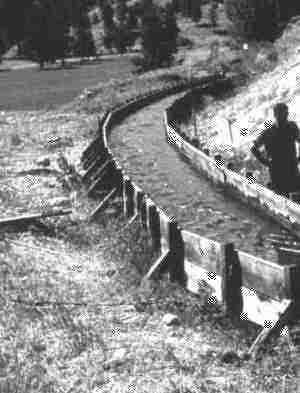
Mr. Ritchie promoted the Kaleden Development Company, with its capital chiefly being obtained in England. The matter of guaranteeing water for thirsty land was the crux of the whole development and the largest task was construction of an irrigation system capable of meeting the needs of the area. Water rights were obtained from Shatford, and Sheep Creeks and the first stage of the water system was started in 1908. Water was taken from Shatford Creek by means of a diversion dam and crossed the valley at Allen Grove through an inverted siphon of twenty-four” wood stave pipe. From that point it was conducted by ditch and wooden flume to a place on Marron Creek, 1 1/2 miles west of the junctions of Highways 3 and 97, where a concrete intake was built. Because of the hilly nature of Kaleden below the intake, ditches and flumes could not be used. The alternative was a system of pipes for distribution- more expensive, but it gave Kaleden a year-round water supply where neighboring communities had to store their winter supply in cisterns.
The pipe used was made of Douglas Fir staves, wound with heavy tempered steel wire, and covered with pitch and two layers of burlap. This pipe was built to withstand three hundred pounds pressure and varied in diameter from 2 to 18 inches. Some of the original pipe lasted for over 30 years before being replaced. Remnants still exist in the community today.
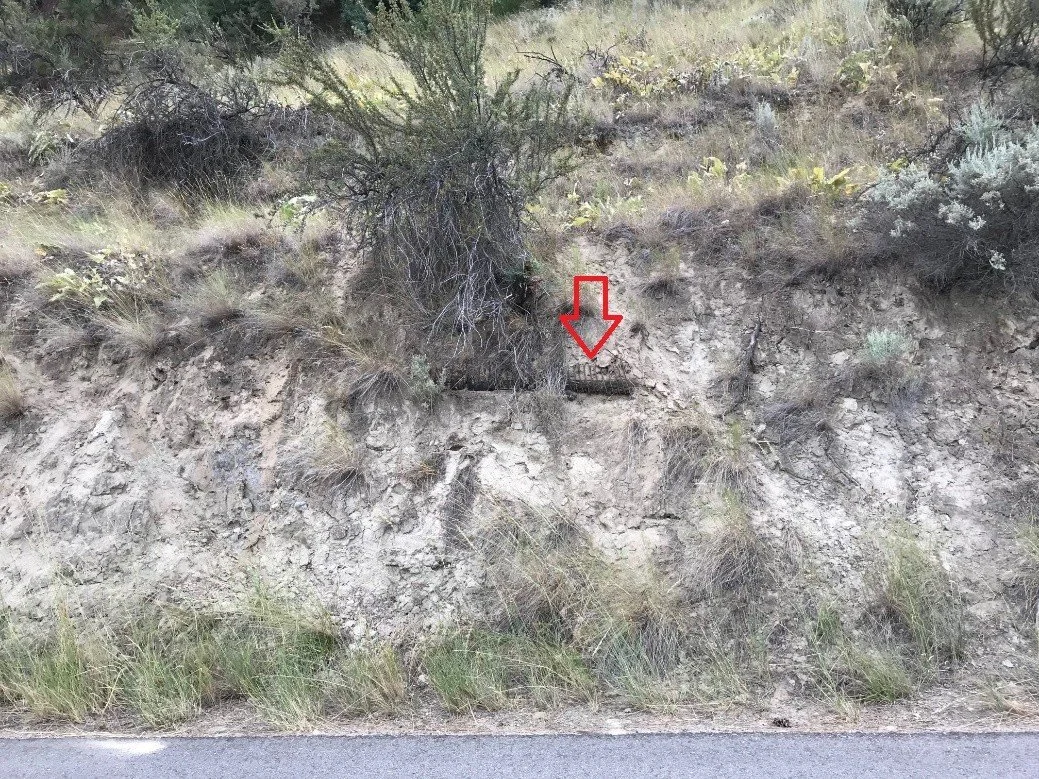
Wood stave pipe remnants on South end of Linden Ave.
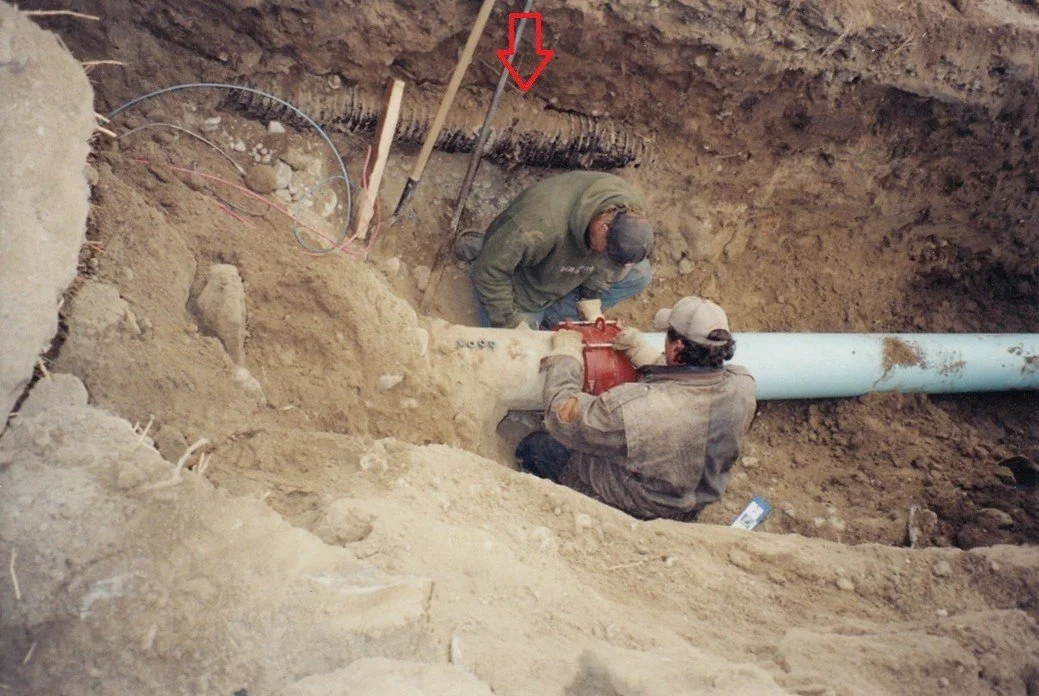
Note remanent of wood stave pipe behind worker.
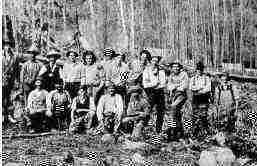
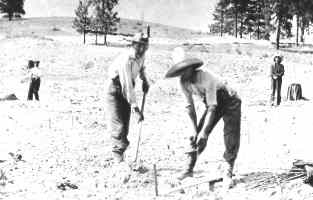
Tom McAlpine was brought in by Ritchie in the spring of 1909 and placed in charge of all construction. He spent most of his time overseeing the work from Shatford Creek to the intake and placed Harry Corbett in charge of twenty men to dig ditches in Kaleden in preparation for pipe laying the following spring. Most of the workers were recruited from the Penticton Indian Band.
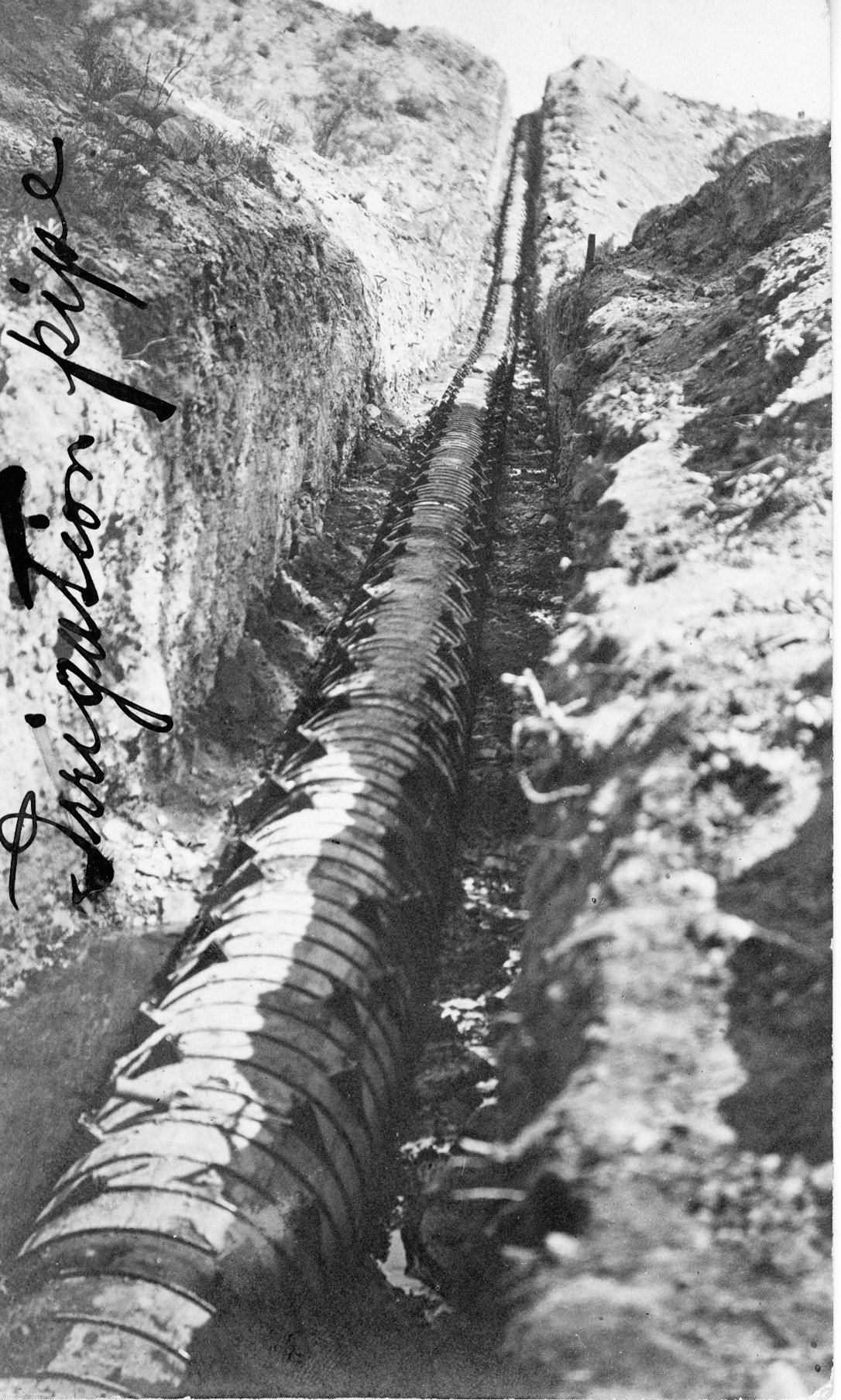
KMA 2023.004.P003
Postcard of wood stave pipe. This postcard is dated Sept 12, 1912.
The work was pushed ahead so planting could be done the following spring. One of the pieces of construction completed that fall of 1909 was a concrete lined ditch at the north end of Marron Valley designed to prevent the soil washing down steep slopes. This was one of the first pieces of concrete irrigation ditch built in the Okanagan Valley.
The first system serviced about the same area that the present Irrigation District covers but was intended for a larger area. In 1911, a branch line was started to supply water to Gillespie Flats. With this in mind a cumbersome and antiquated ditch digger was purchased to replace hand dig trenches. However, it proved to be useless for the job, and this coupled with a lack of funds and the uncertainty as to an adequate supply of water brought this extension to a halt at Junction Ranch. As a result, a planned Gillespie subdivision of 618 acres was abandoned.
There were many changes and addition to the water system over the ensuing years. The old Gillespie earth dam at Marron Lake was reinforced and a new dam with a cement core was erected at Eneas Lake in 1912.
During the development period from 1911 to 1916 no tolls or taxes were levied on the area planted. By 1916, when approximately one-third of the planted area had been sold to private individuals, it was realized that funds had to be raised for the maintenance of the irrigation system and the Water Rights branch authorized a tax levy of $2.00 per acre.
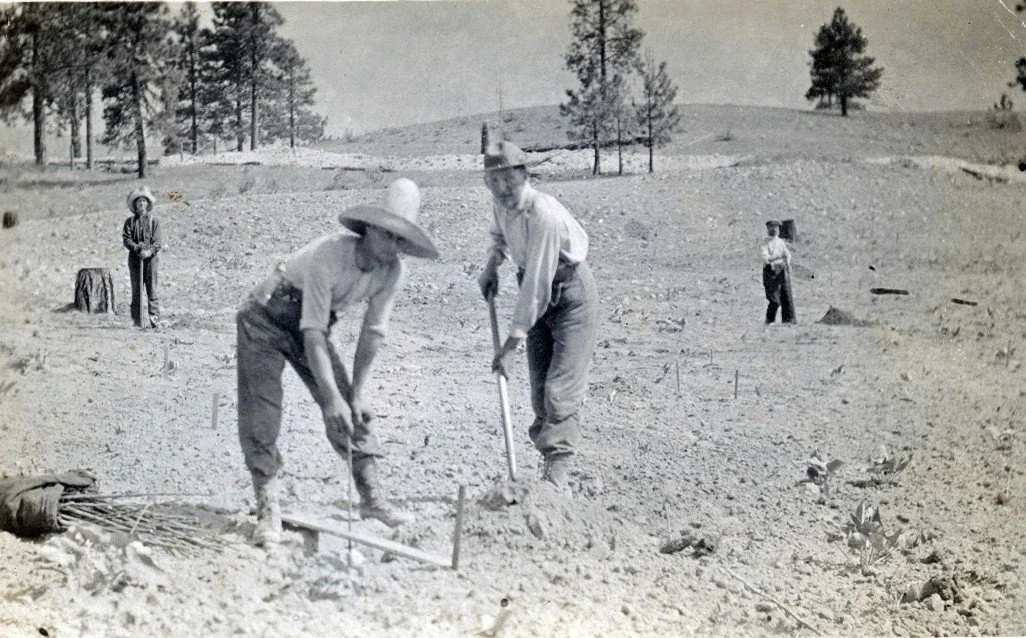
KMA 2018-001-P073 (Ron King collection)
Early Planting Crew circ 1910.
The depression starting in 1913 and the outbreak of war put an end to the plantings not only in Kaleden but throughout the valley.
From 1916 to 1922 the orchards suffered considerably from lack of care and attention. Labour during World War 1 was extremely short and further funds were not available from London. During this period trees planted over approximately three hundred acres died out.
In 1922 Sir William Hutchison Poe acquired all the lands granted to the Kaleden Development Corporation with the exception of approximately two hundred acres purchased by private individuals. At that time, Kaleden under the provisions of the Water Act was constituted an Improvement District. The first trustees of the Kaleden Irrigation District were Col. Ewart, Frank Harrison, F.W. King, R.D. Mutch, and H. W. Corbitt.
An agreement was reached between Sir William and the Improvement District to the effect that Sir William would expend the sum of $31,300 on repairs and renewals to the existing irrigation system. In 1922, Robertson and Partners were awarded the contract to replace the old earth dam at Marron Lake with one having a concrete core, increasing the height from 5 to 25 feet.
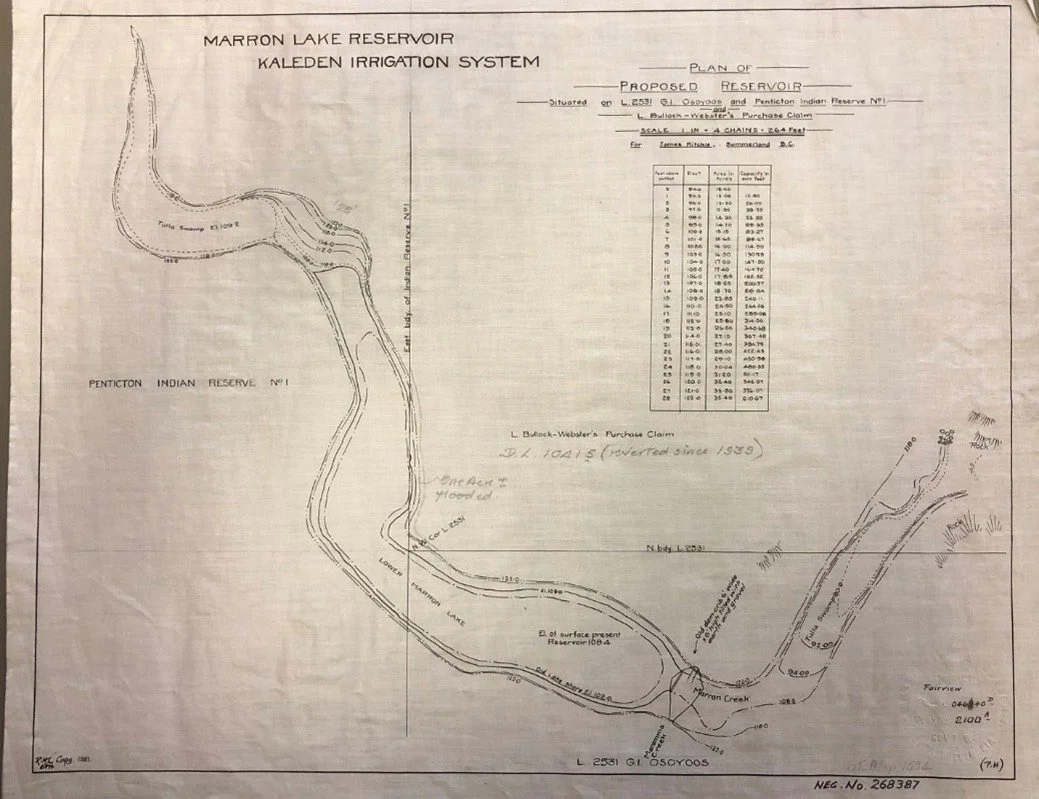
1921 drawing of Marron Lake
In return for this expenditure the Improvement District undertook to refund a portion of this sum by the issuance of thirty serial debentures payable without interest each year from 1922 until 1951 inclusive.
To provide for the redemption of the debentures the district was authorized to levy an additional tax of $4.00 per acre on approximately two hundred acres classified as grade A lands, over and above the tax of $8.00 an acre on other land.
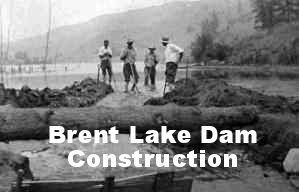
By 1931 the orchards were in full bearing, and it became evident that Shatford Creek could not be counted on for an adequate supply of water. Consequently, the system was extended by diverting water from Shingle Creek and erecting two dams to form upper and lower Brent Lake. Interior Contracting Company completed the work in 1932, providing and increase of 1,000-acre feet.
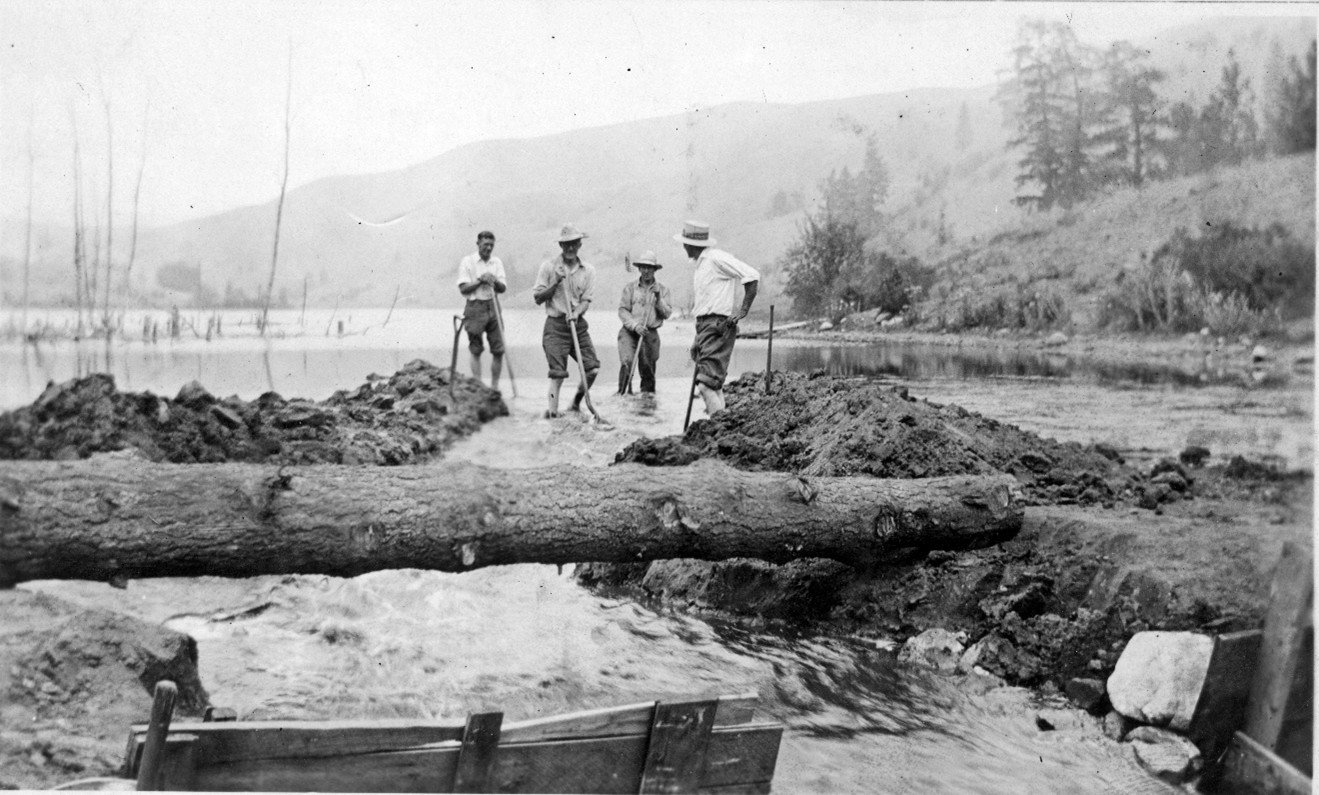
KMA 2018-001-P170 (Ron King collection)
Brent Lake Dam approx. 1932.
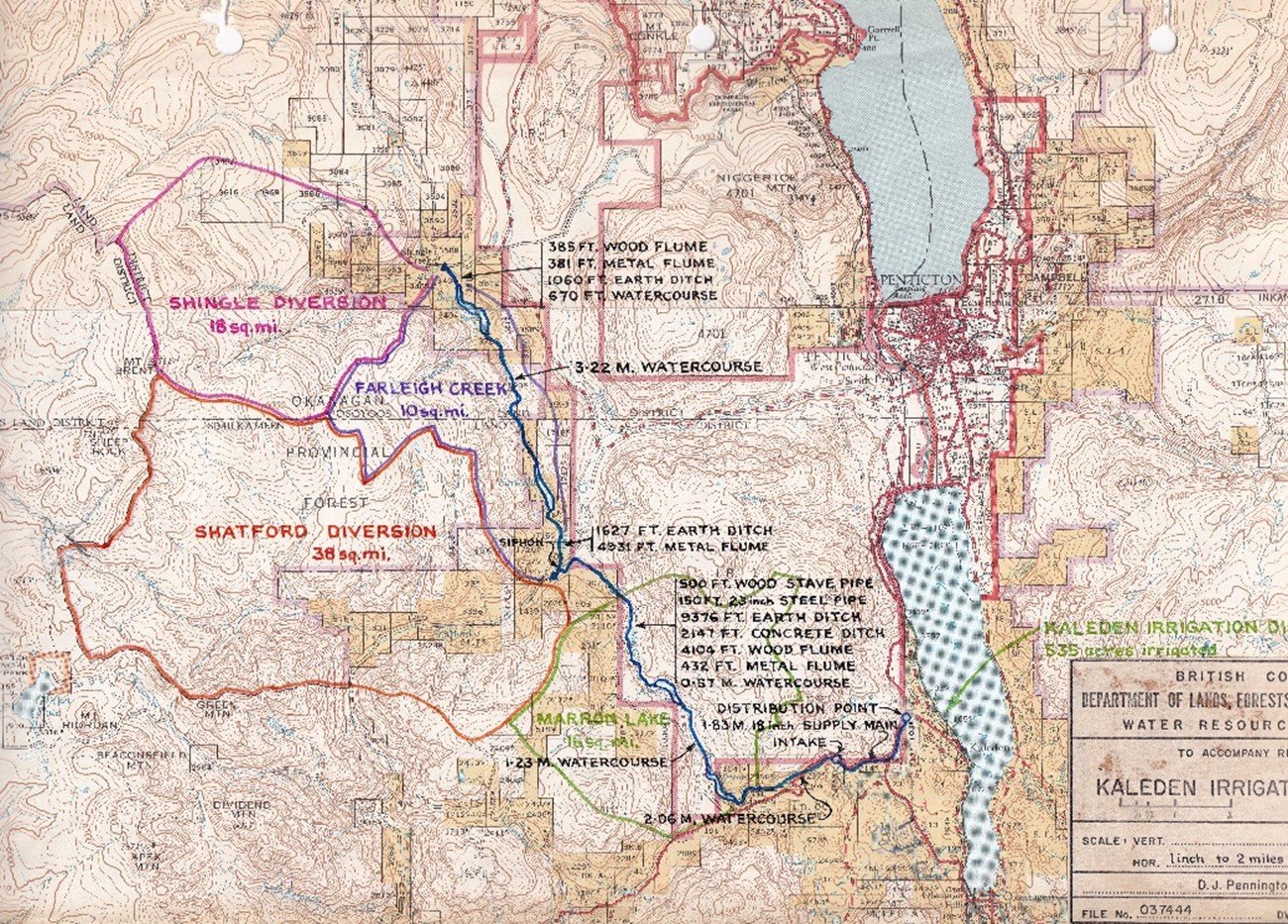
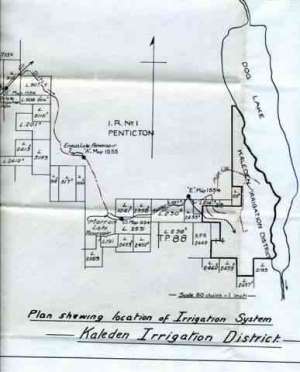
Map showing KID water system circa 1940’s.
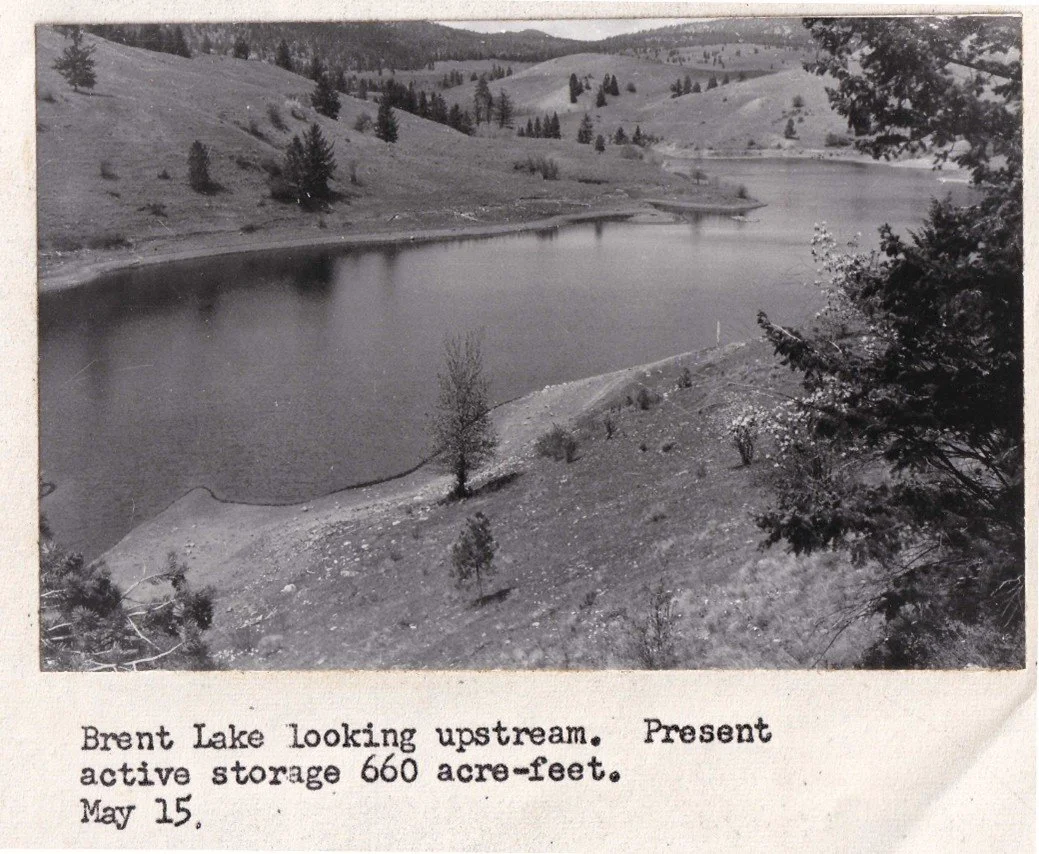
May 15, 1963.
Unfortunately, the whole quantity of water was not available to the Kaleden Irrigation District. In exchange for rights of way, the District undertook to supply and convey to property owners along the route over which the system was installed, approximately 1014-acre feet of water for which no tax was levied, with the exception of one isolated case where a small and inadequate levy was made.
In 1950’s the system had deteriorated to the point where replacement of certain sections became essential. The cost of maintenance exceeded the revenue obtained from taxation and the sale of lands. Loans totaling $57,000 were obtained from the provincial government through the Water Rights Branch, which enabled the District to replace the siphon at Allen grove, one thousand feet of wood flume, excavation of a channel to replace 1700 feet of wood flume and 4876 feet of wood pipe along the south main in Kaleden.
The system extended over twelve miles from Shingle Creek to the intake at Marron Creek and included flumes and ditches. From the intake into Kaleden and including the distribution mains, there were approximately ten miles of piping.
The following pictures are from 1963.
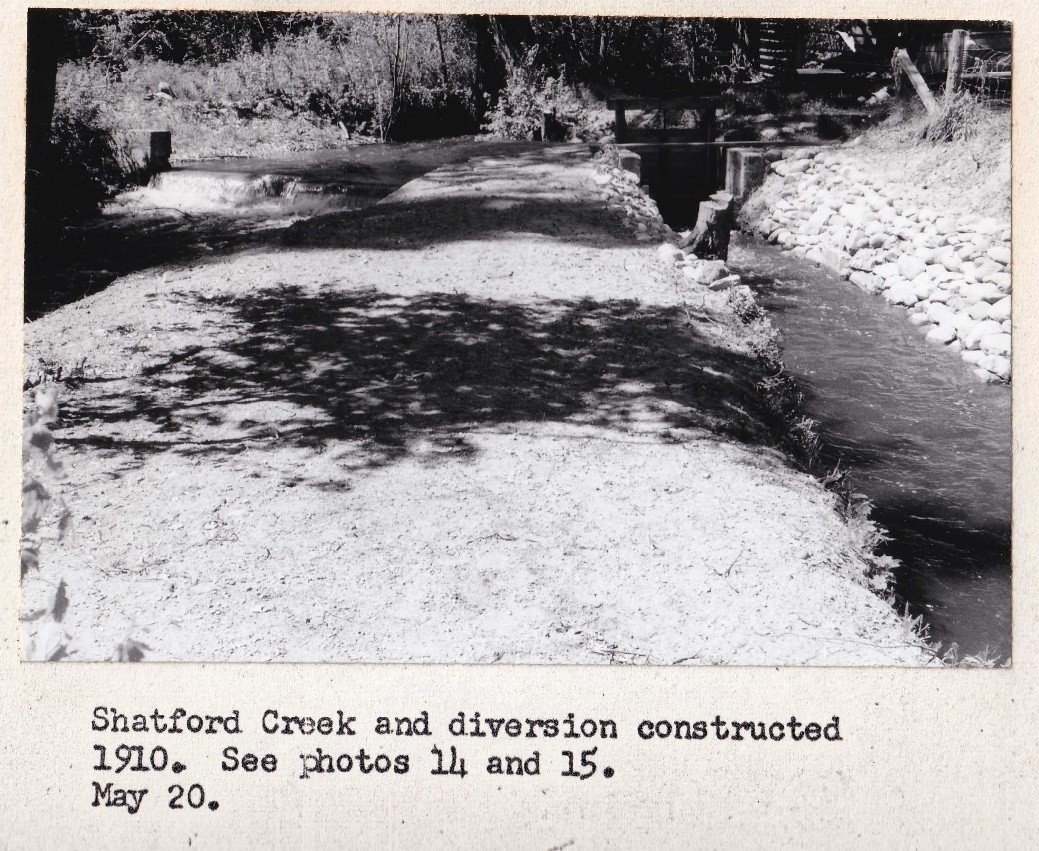
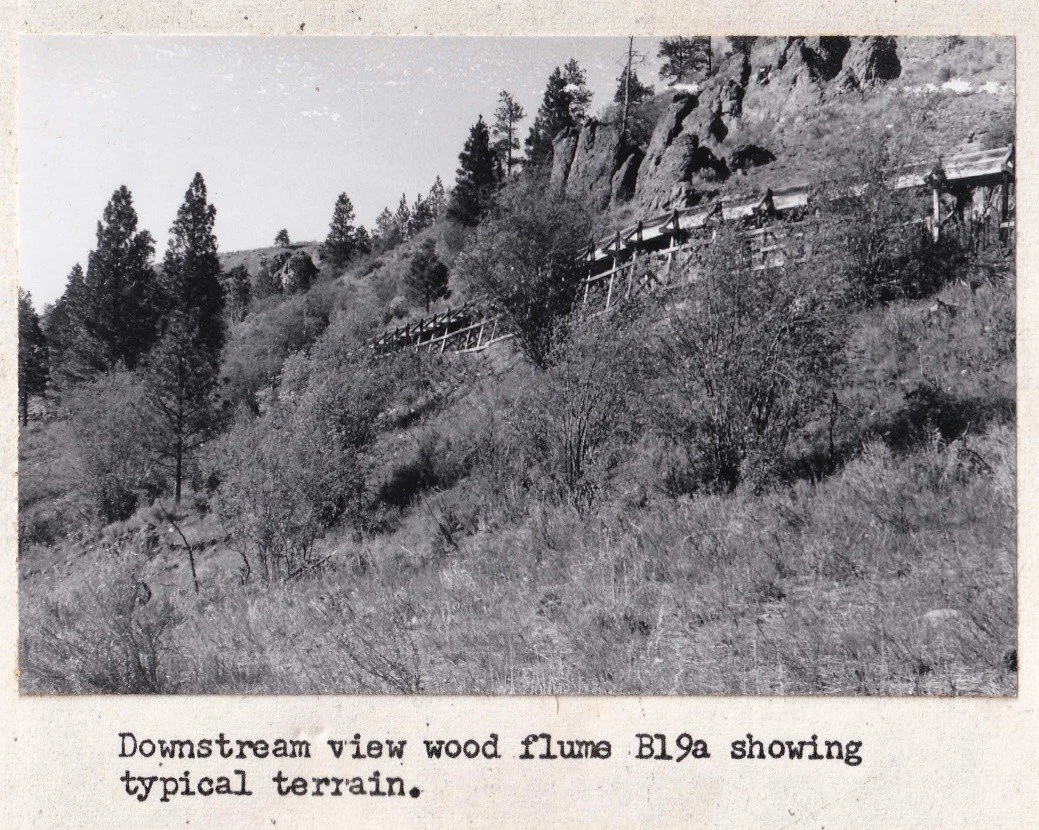
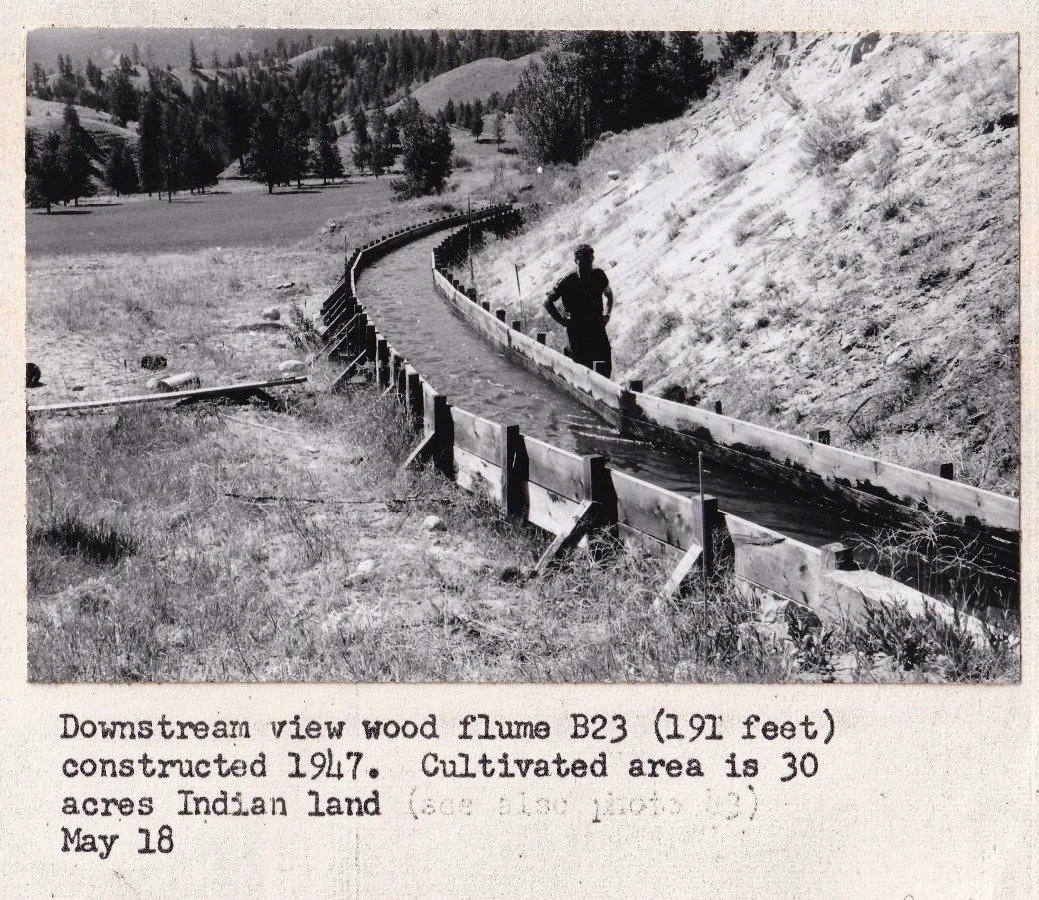
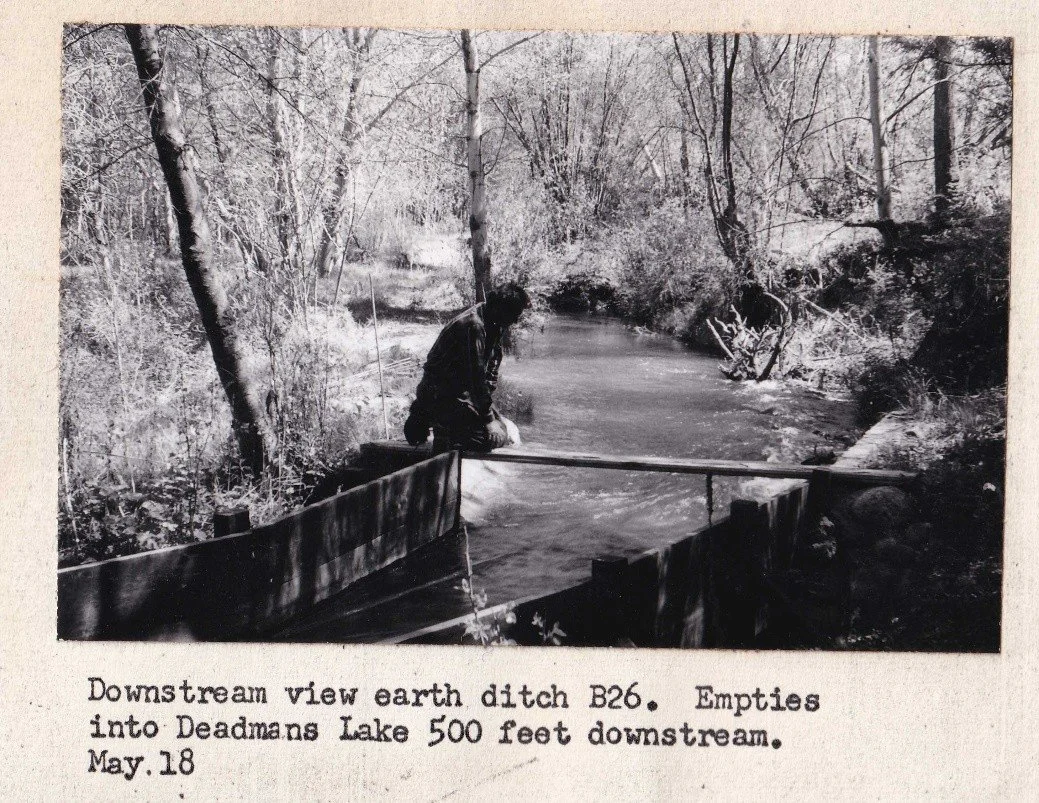
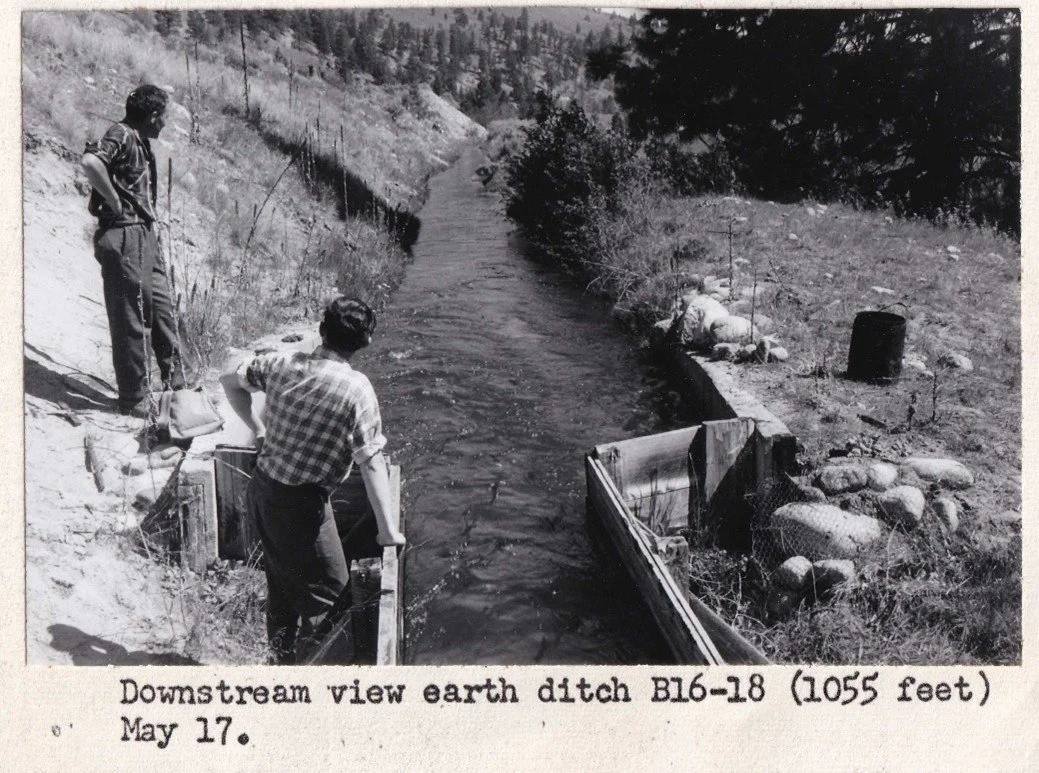
The next change in the system was in the orchards themselves, when in 1949 the sprinkler replaced the old furrow method of irrigation. As Kaleden has always had a pressure water system, the change was easily made and in the 1960’s over 90% of the orchards had adopted this method.
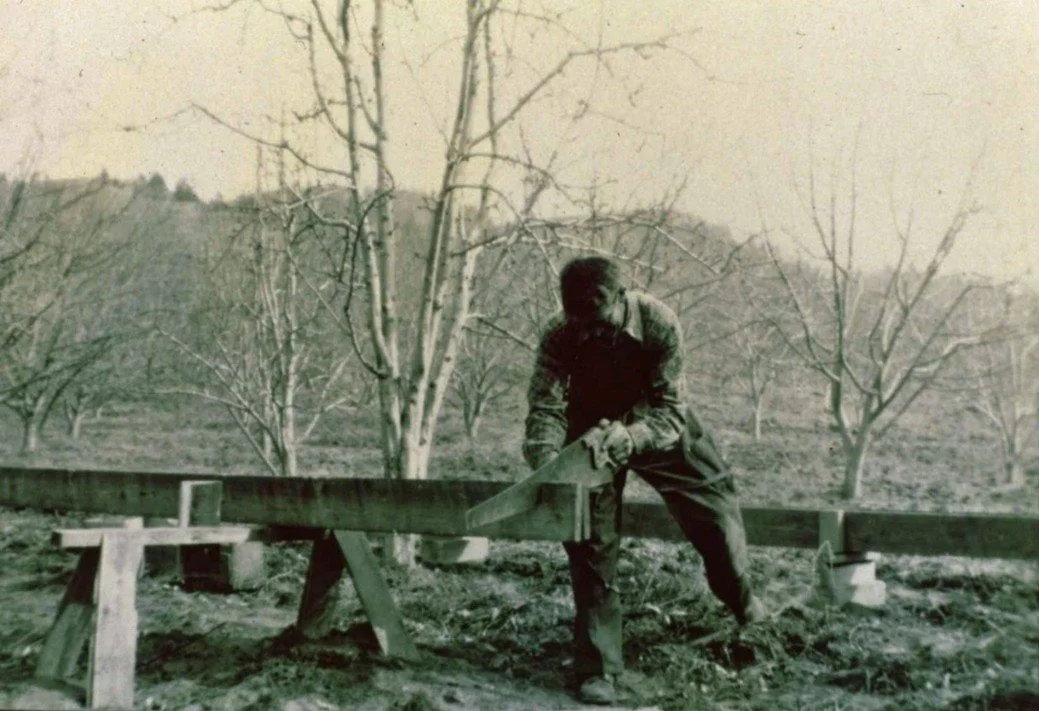
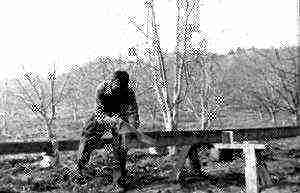
Flumes construction for orchard use circa 1925.
Jim Harrison and Hartley Simpson were the first water foremen for the upper system while N. K. Simpson served in that capacity in Kaleden, followed by Tosh Rawkins and Jack Swales, the latter serving for over 20 years.
Many old timers recall the interesting plant and animal life that floated from the water taps during these years as well as water shortages when a blow out occurred on the wood stave pipe, or a section of flume was knocked out by a falling tree.
On September 13, 1963, the general meeting of Kaleden ratepayers elected to proceed with a program to rehabilitate the gravity irrigation system with ARDA (Agricultural and Rural Development Act) assistance. In June of the following year the decision changed to convert to a pumping system. Work proceeded to install a pumphouse on Skaha Lake consisting of four units totaling 725 HP, capable of pumping five ¾ million gallons per day over a total of 535 acres.
Laying of 35,300 feet of new distribution mains began on April 1, 1965, and the construction of the intake line commenced the following January. And our WW2 DUKW came to help! In 1960, my father had purchased it in Seattle for $400 to use in place of a moving van. After loading it with all of our household belongings and driving it to our new home in Kaleden, he sold it to a local contractor, who turned out to be the successful bidder for installation of the intake line, and he used the amphibious DUKW when constructing the intake.
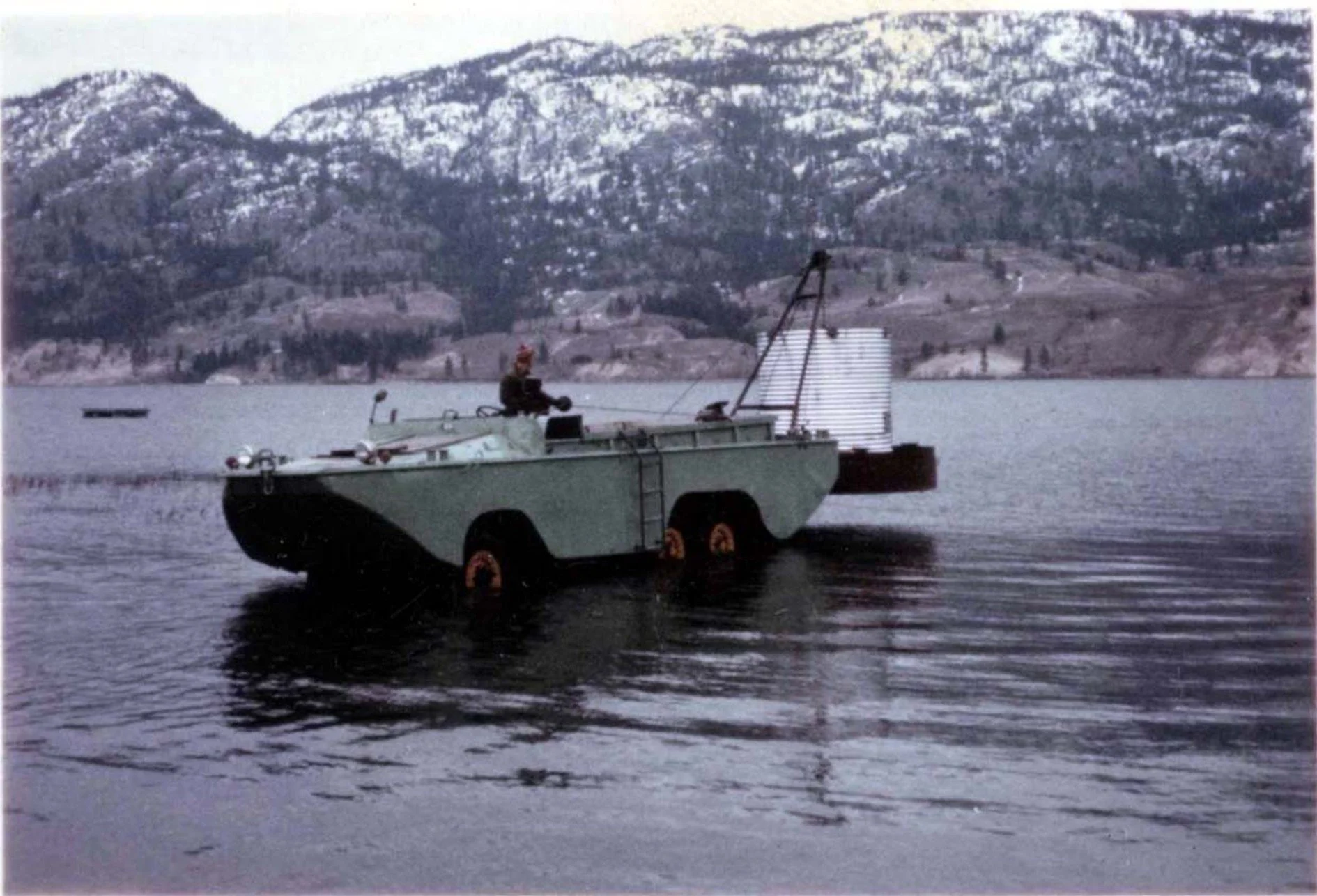
WW2 DUKW makes its debut 1965.
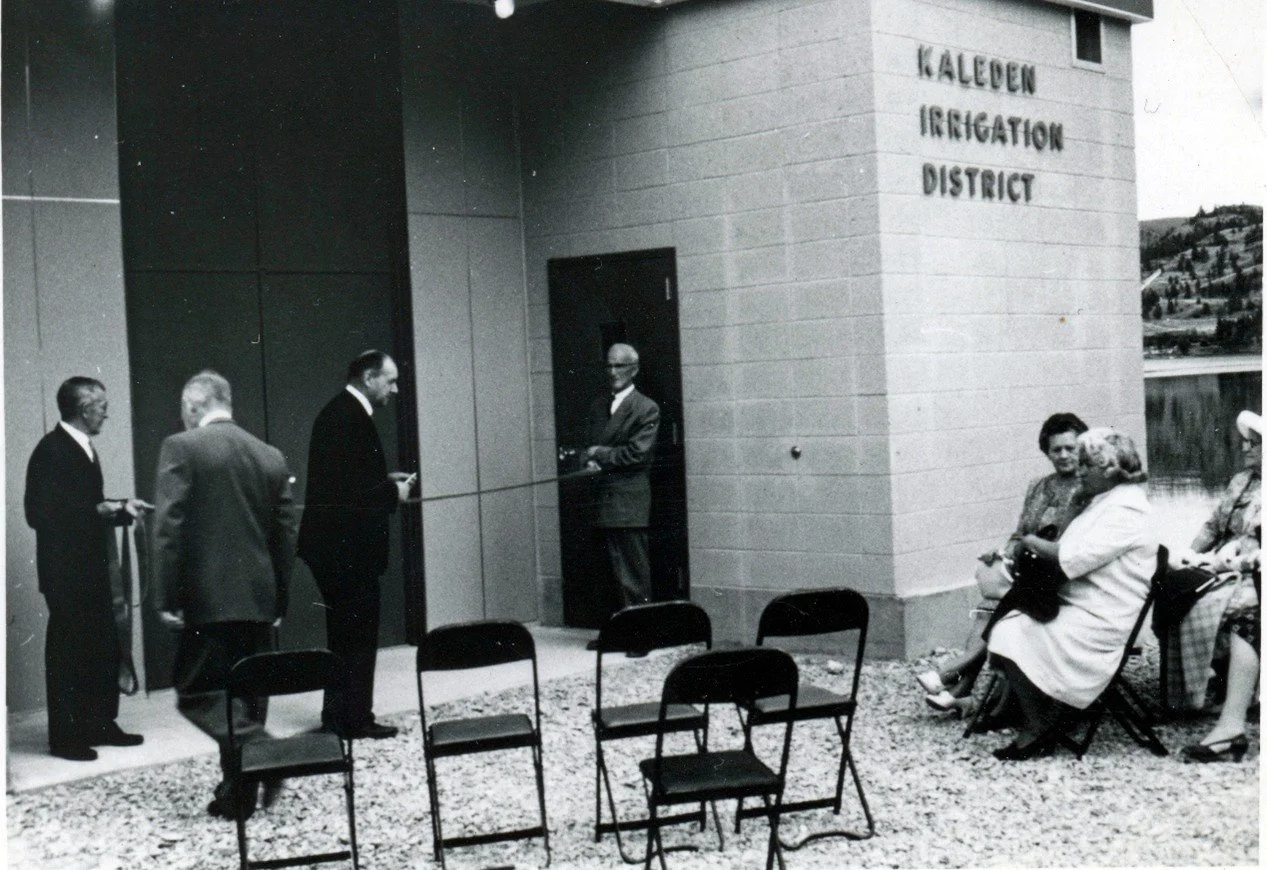
KMA 2018-001-P159 (Ron King collection)
Grand Opening of Kaleden Irrigation Districts new system June 30, 1966, by The Honorable Frank Richter, Minister of Agriculture.
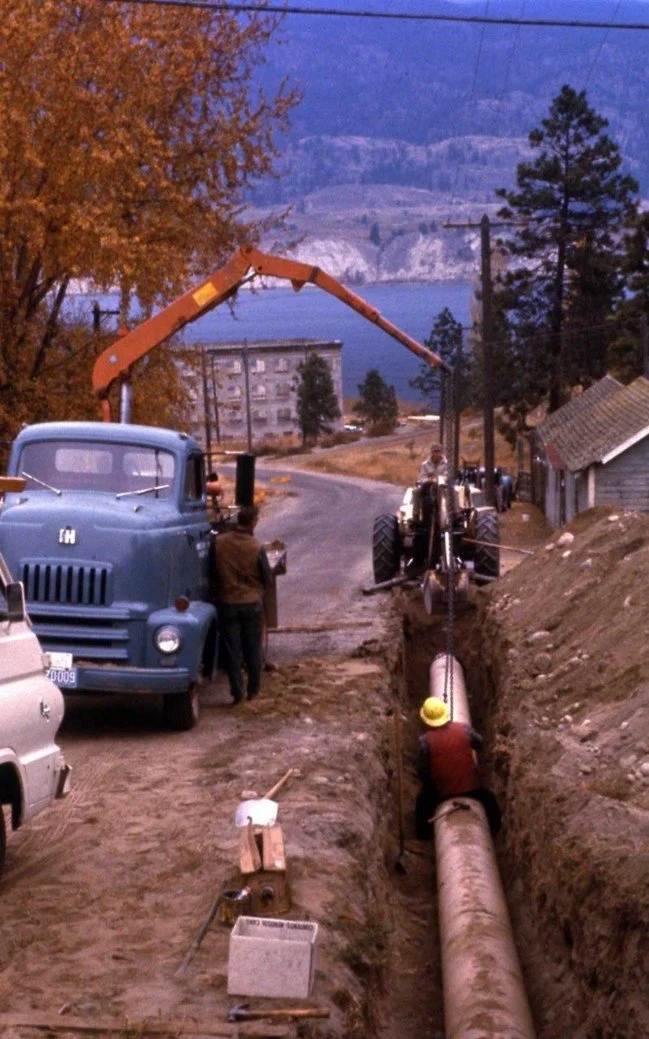
Pipe laying on Lakehill Road 1965
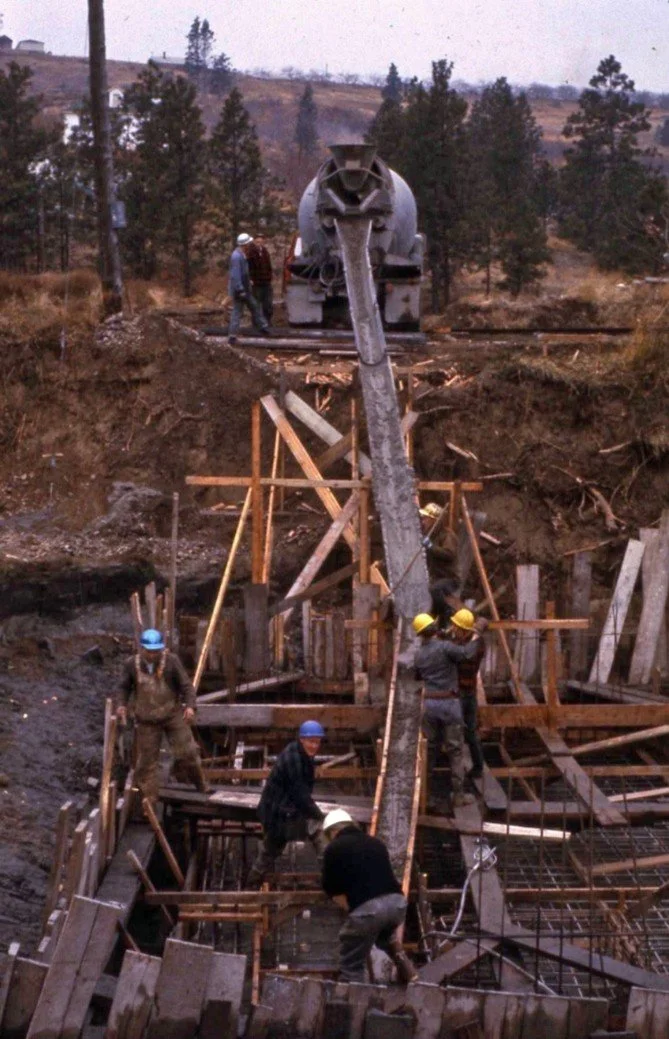
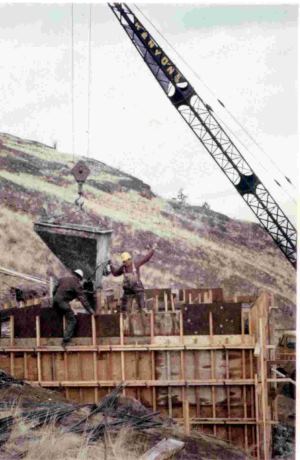
Pumphouse Construction 1965
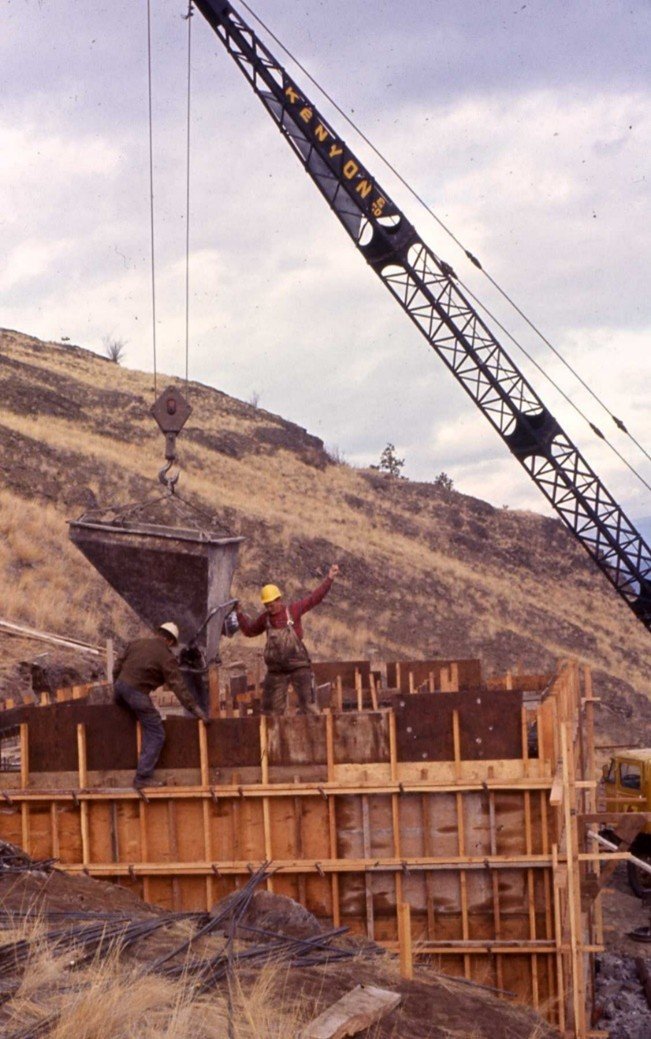
Head tank construction on side of Greyledge 1965.
In 1965 the District was given the Kaleden Cemetery from the local Trust who had been running it. Our Letters Patent were altered so KID could operate this community service.

LINDEN RESERVOIR
Construction of a Zone I reservoir and Zone II pump station was put out to tender in early April of 1982, with bidders requested to quote on two options: Alternate 1 was a 50,000-gallon rectangular reservoir, and Alternate 2 was a 100,000-gallon circular reservoir. The Zone II pump station, Dayton & Knight engineers recommended the use of a 1750 RPM Cornell 2 ½ W close-coupled centrifugal pump, driven by a 20 HP motor.
Ratepayers voted to proceed with Alternative 2 for a total contract price of $75,300. The rationale for this choice was to accommodate anticipated future increases in water demands, but with the intent to operate the reservoir in the interim at the lower 50,000-gal capacity.
Work was completed by December of 1982. Additional costs (engineering fees, surveys, equipment rentals, concrete and testing, materials, electrical, pumps, piping, valves, bid bond, and miscellaneous labor charges) were paid directly by KID, bringing the total project price to just under $150,000.
It had been anticipated that the recommended altitude valve (Flygt reservoir level regulator system) would be able to operate at the lower 50,000-gal capacity but this was not the case, and the reservoir could not function as originally intended.
In 1993, Stanley Associates Engineering Ltd were engaged by KID to undertake detailed engineering design and construction management to better use the Linden Reservoir’s storage capacity.
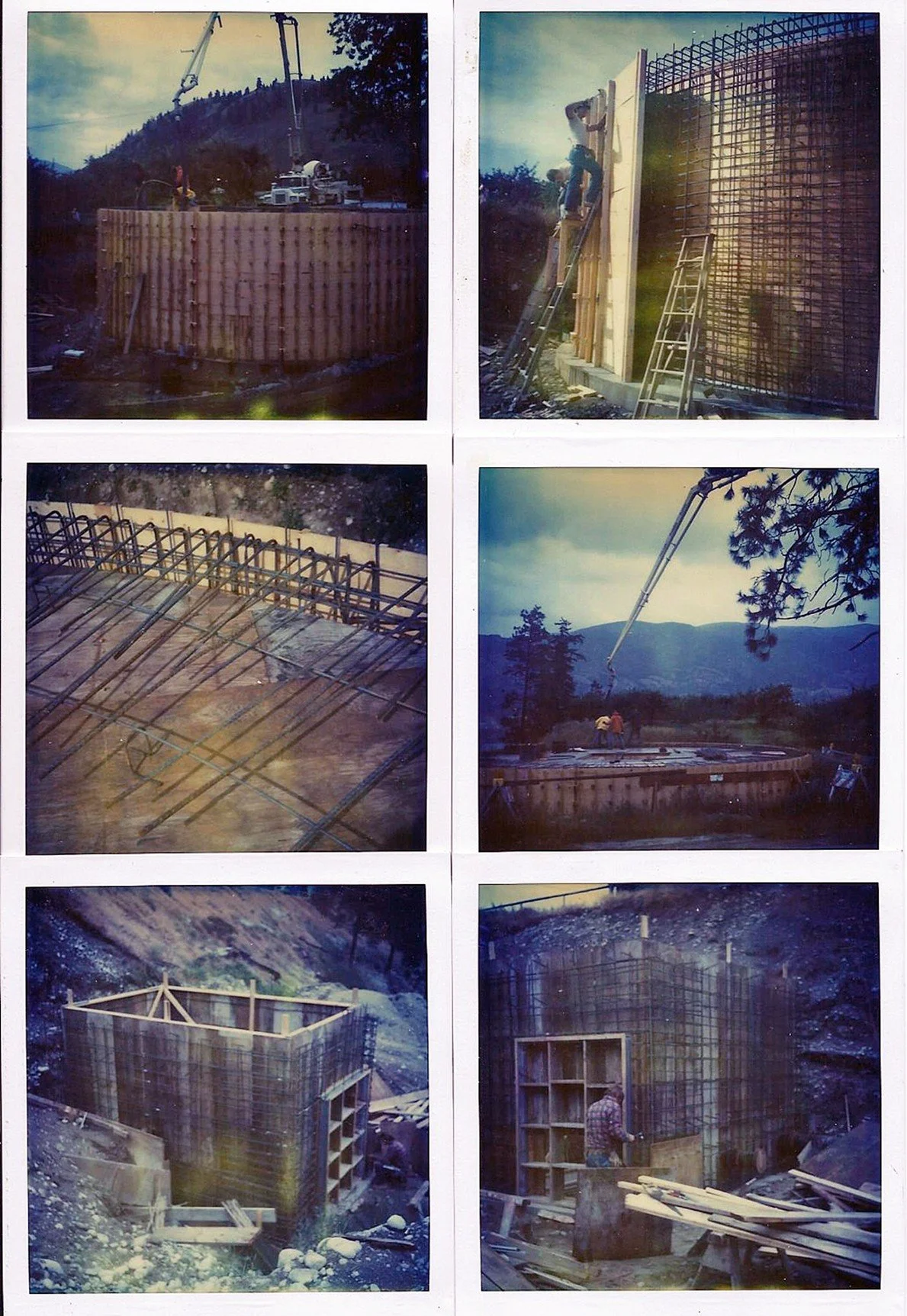
Linden Reservoir construction.
OFFICE CONSTRUCTION
In 1993, formal planning began to upgrade KID’s office and storage space. It was proposed to demolish the existing garage/storage shed (dimensions approximately 20 ft by 24 ft, or 480 sq ft), and to add a 726 sq ft extension to the north side of the existing concrete-block office (dimensions 14.75 ft by 20.75 ft, or 306 sq ft).
On 01 March 1994, KID applied to the RDOS for a Permit for Erection, Alteration or Repair of a Building and Installation of Plumbing to demolish the garage and construct the addition to the office. The permit was issued on 24 March 1994, conditional to Board of Variance approval (BV-15D-93). The existing office was converted into workshop and storage space. The addition included an entry/ front-counter reception area, meeting room, bathroom, utility room, records and equipment storage, and office space for at least two workstations.
Also in early March of 1994, bids were received for construction of the office addition; D.A. Pereira Contracting Ltd.’s bid of $44,245.00 was accepted. The bid did not include the costs of building permit, floor coverings, window blinds, vacuum system, the front counter, chain link fencing for the outside storage area, or installation of the natural gas line. With these additional items, total project costs came to approximately $50,000.00.
On 08 April 1994, the BC Ministry of Forests issued KID Class A Burning Permit 52360 to burn demolished building material (no prohibited materials) on-site, to be completed by 14 April 1994. Valley Hoe Excavating Ltd demolished and burnt the shed and broke up and removed its concrete foundation and floor. This work was completed by 14 April 1994.
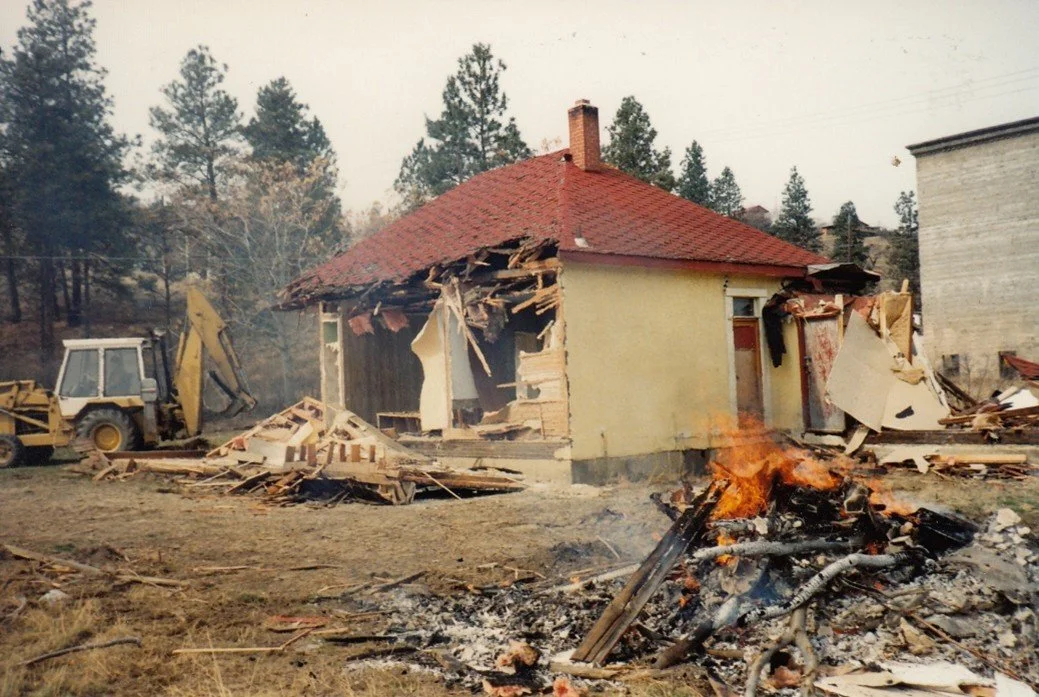
Removal of the old “cookhouse” building.
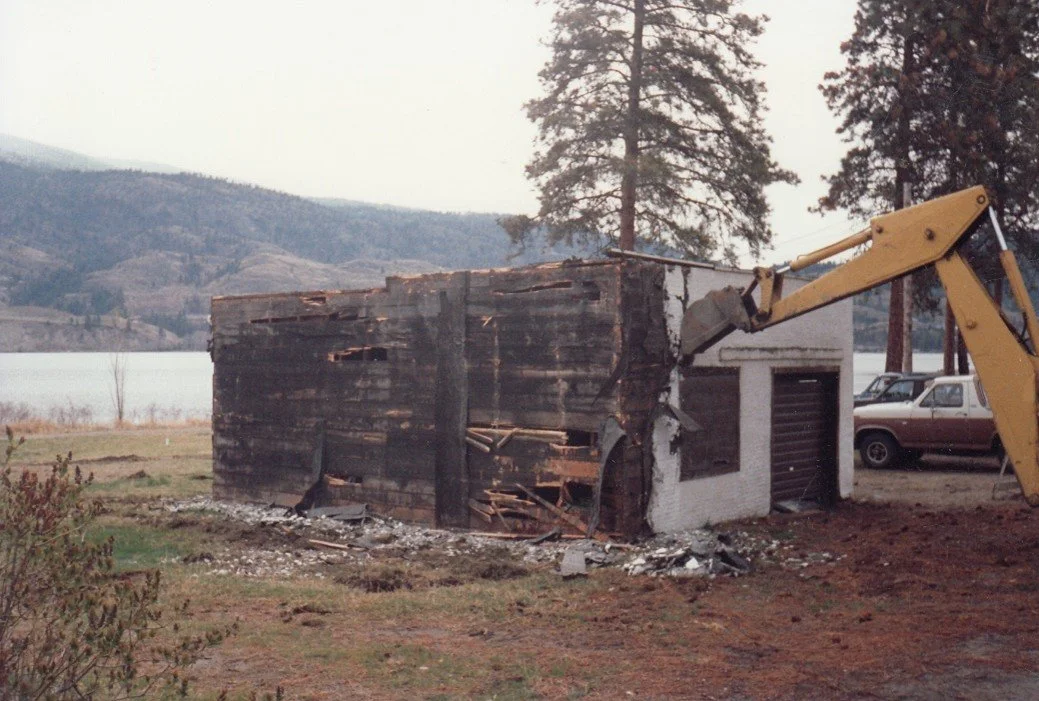
Removal of the old “workshop”.
Construction of the addition began in late April of 1994 and was completed by the end of July of 1994.
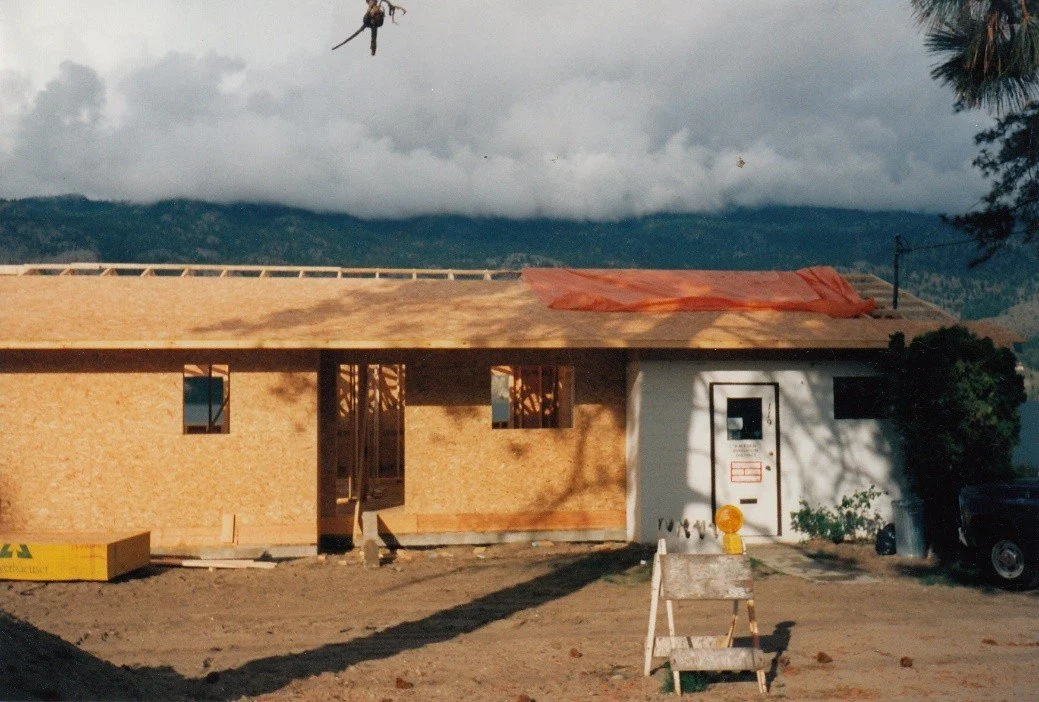
New KID office under construction.
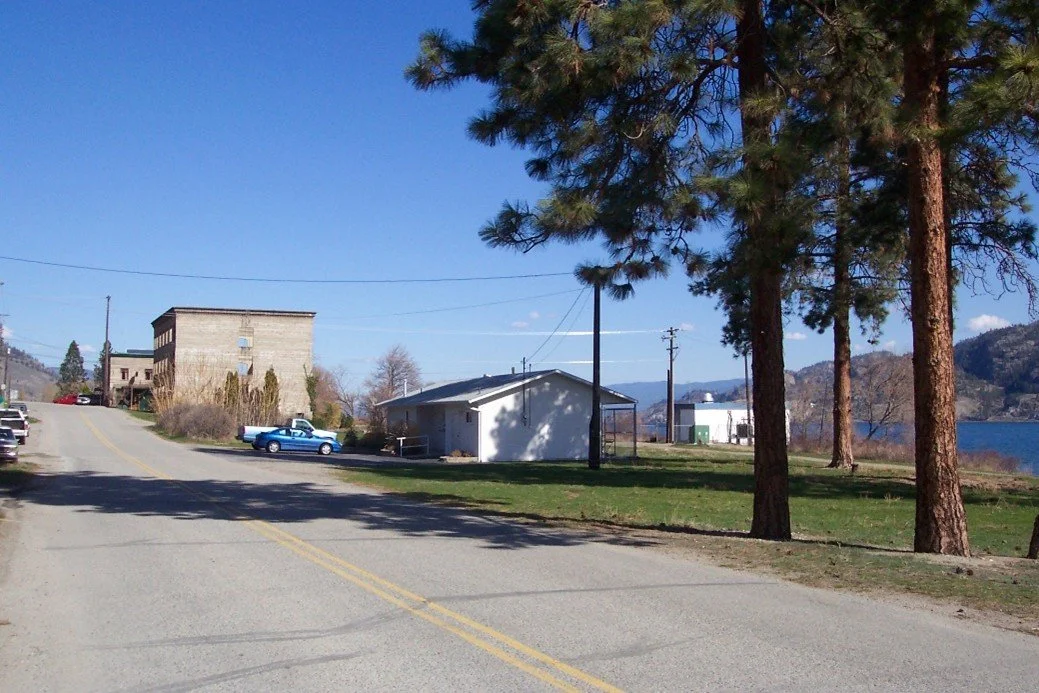
Current view of the KID office.
CYPRESS RESERVOIR
KID moved forward on construction of a new 1.3 million litre two chamber reservoir in 2003.
T.R.U.E Engineering were the design engineers and Herrick Construction awarded the contract for $299,600.
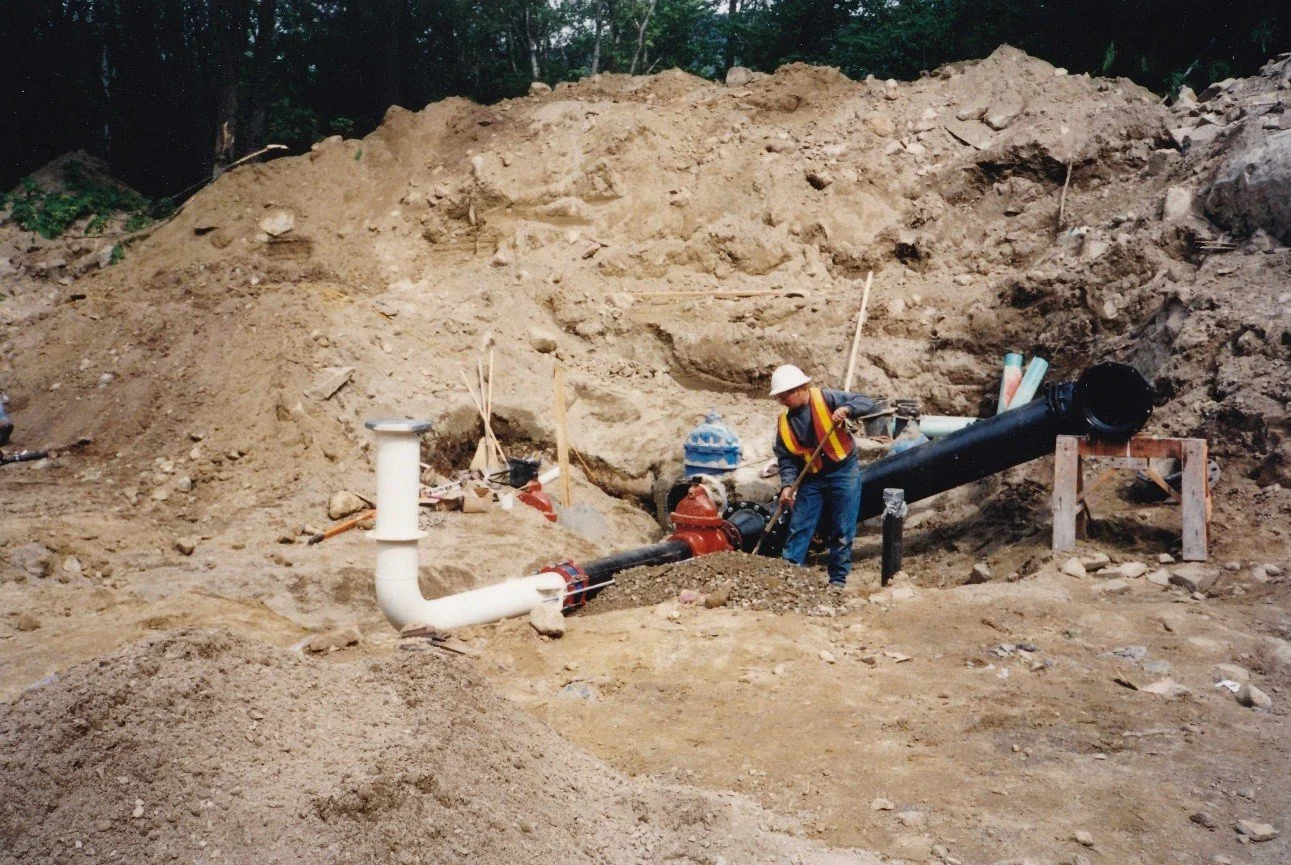
Valve chamber construction.
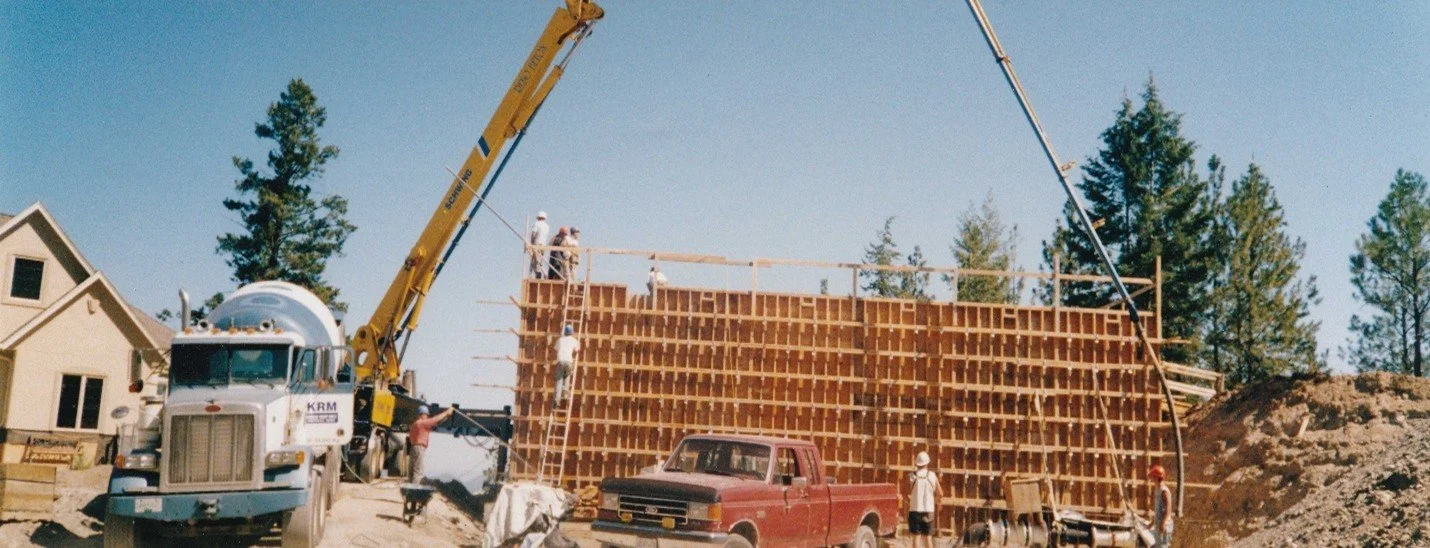
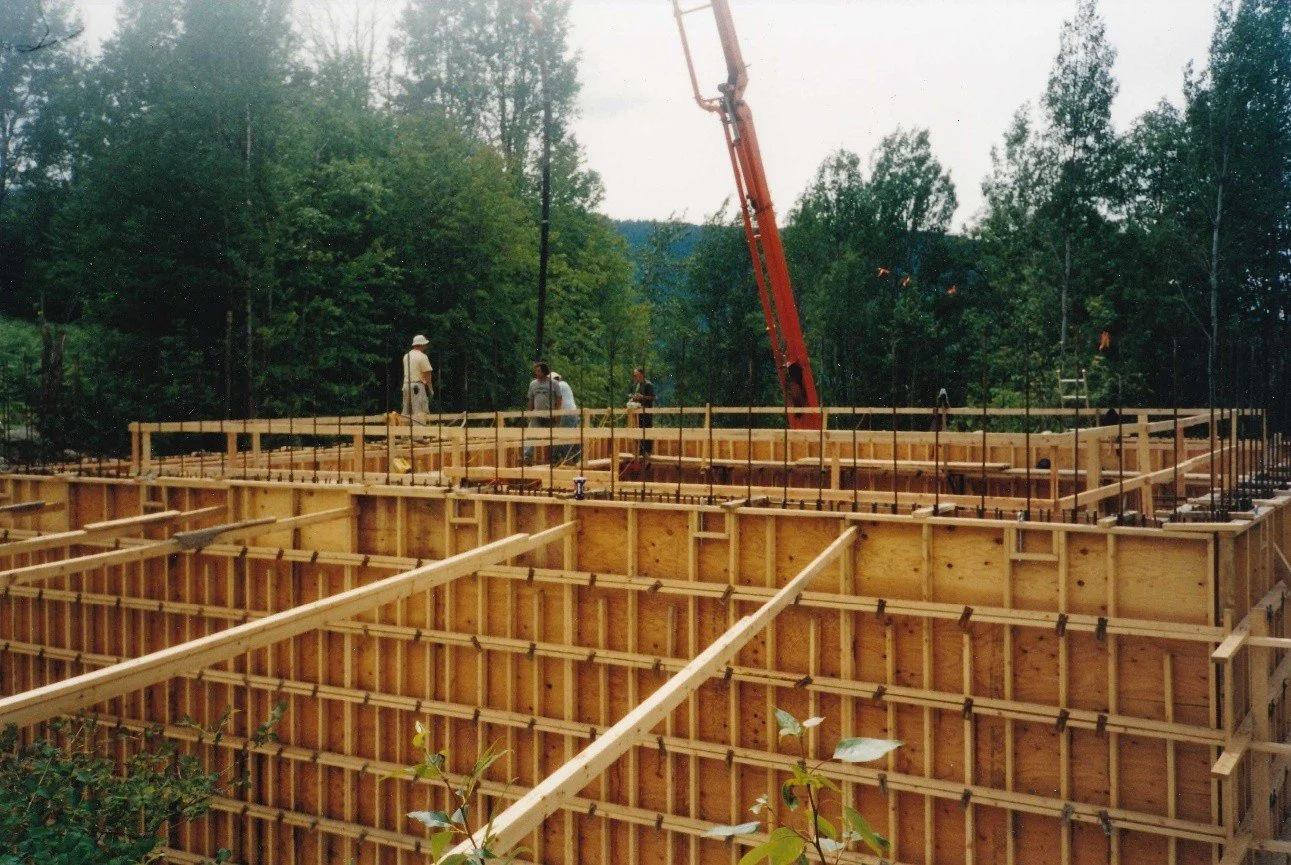
Cypress Reservoir construction
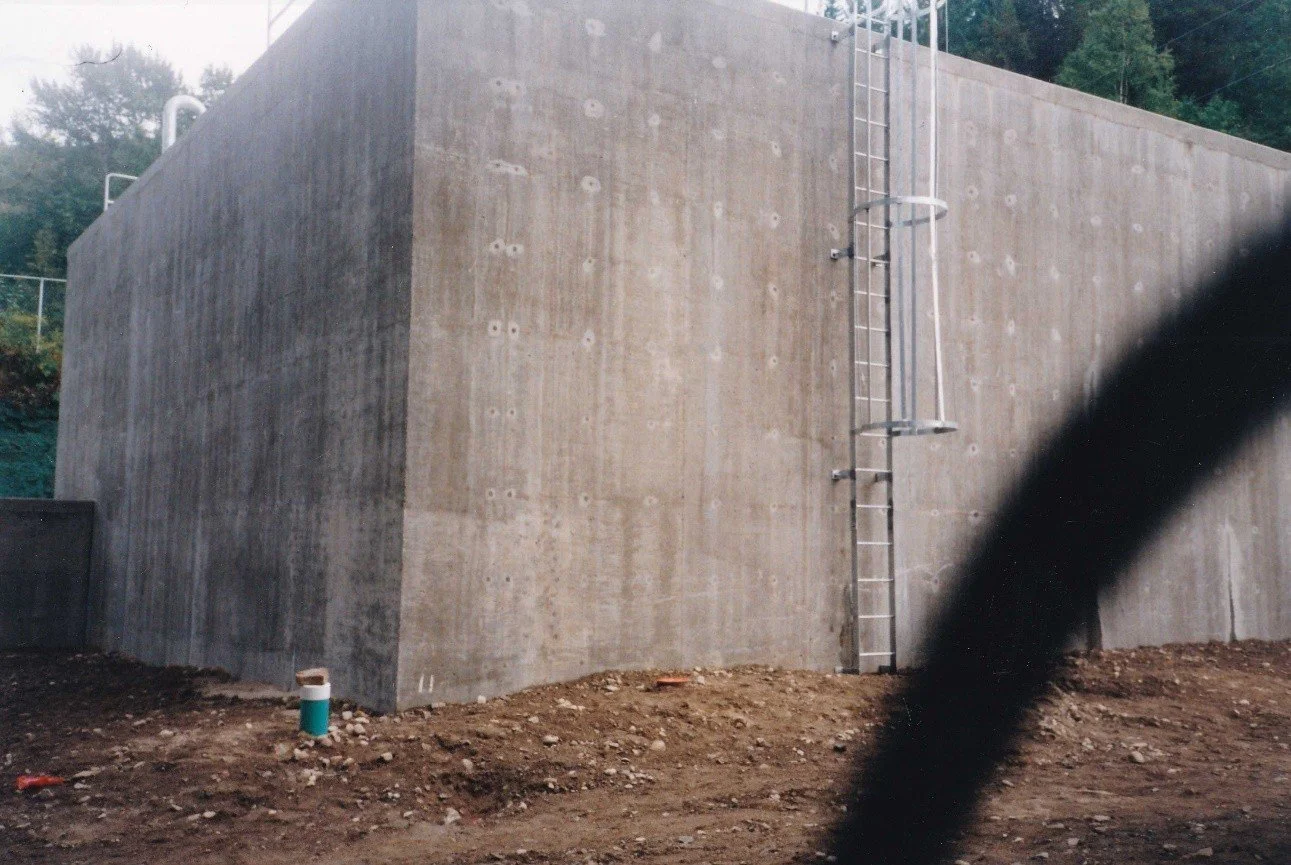
Cypress Reservoir
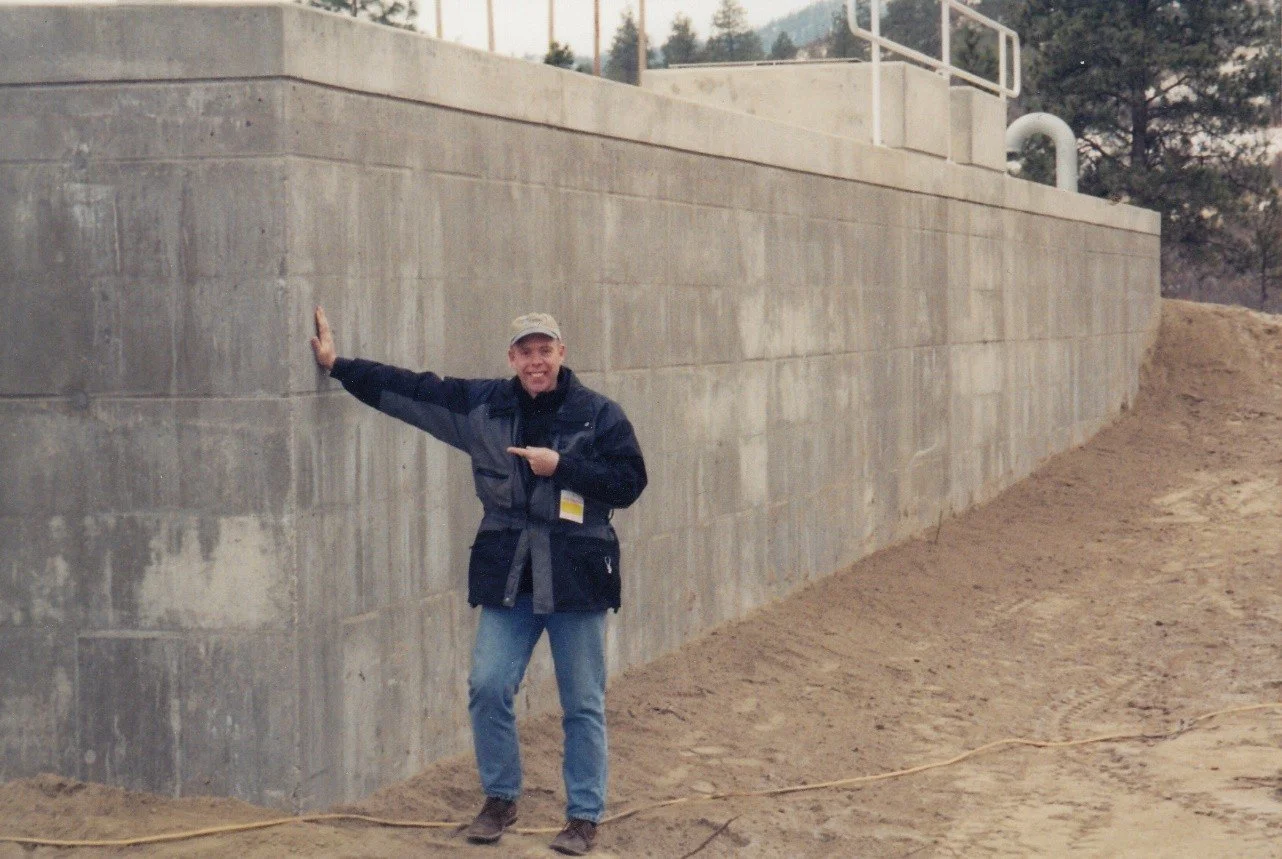
Kevin Huey and Cypress Reservoir.
SKAHA LAKE INTAKE UPGRADE
KID moved forward on replacing the Skaha Lake intake in 2006. Installation of approximately 210 m of 700 mm HDPE intake line and screen, to be tied into the existing wet well at the pumphouse. An addendum specified the removal and disposal of the existing intake assembly, including 24 m of the thirty” corrugated steel pipeline that was exposed on the lake bottom. Tender closing date was 23 November 2006.
Fraser Burrard Diving Ltd was the successful tenderer, with a total contract price of $295,390.20.
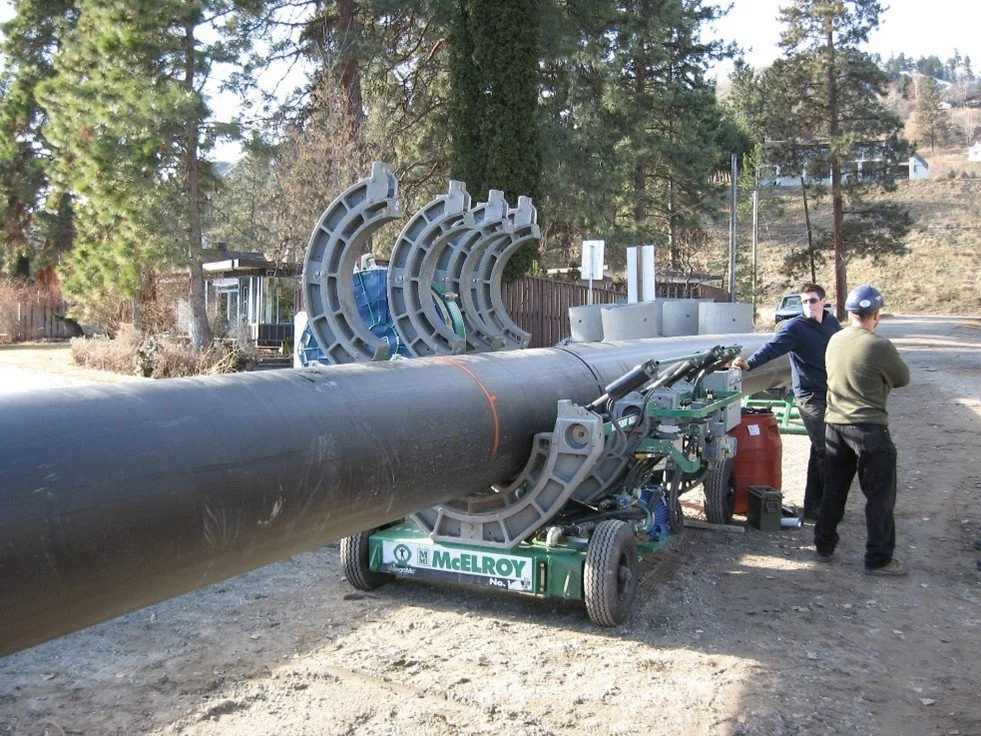
Welding the HDPE pipe on shore.
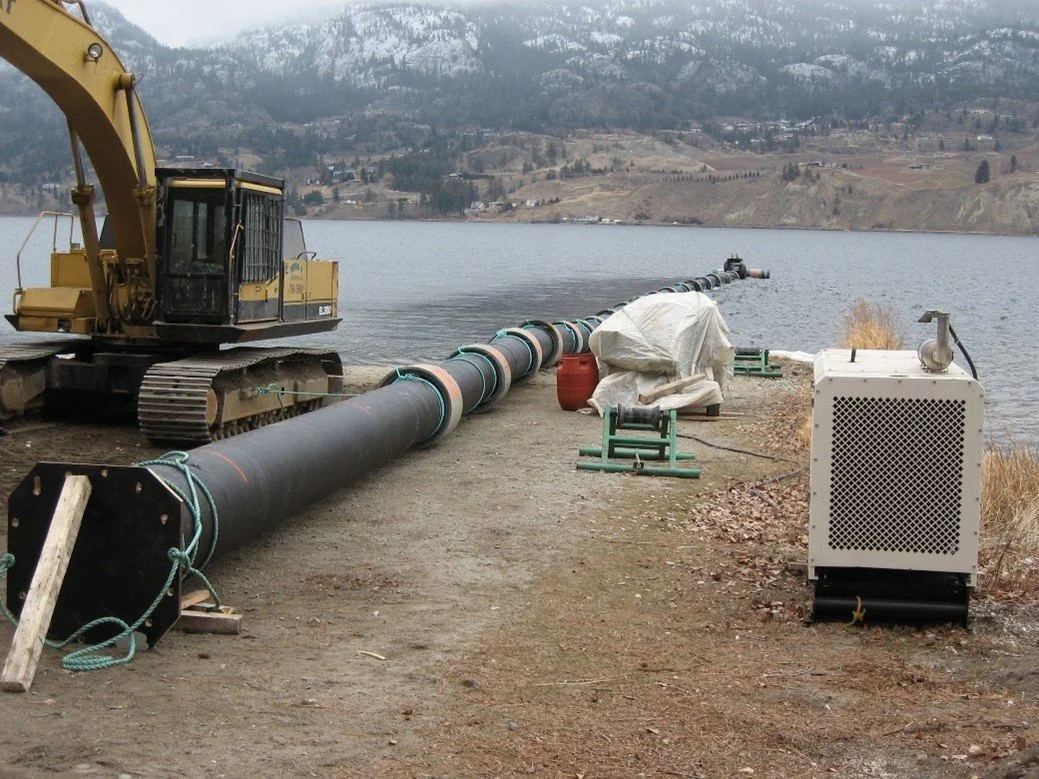
Floating the welded HDPE pipe out into Skaha Lake.
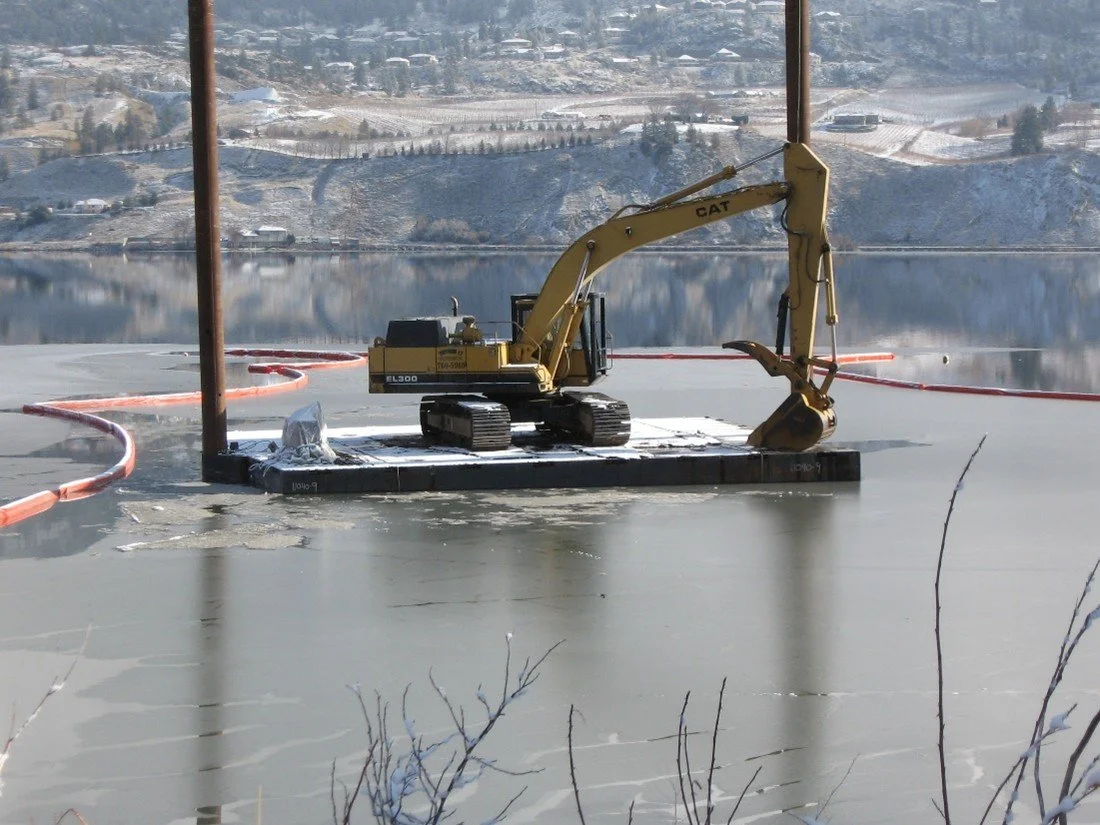
Excavator and barge used to bury new intake pipe.
- Approximately 210 m of 700 mm DR 32.5 HDPE pipe was installed from the pumphouse NE from elevation 335.8 m down to 313.4 m (24.0 m below the lake’s low water level)
- 130 m of the upper portion of the line was buried at least 0.9 m into the lake bottom
- concrete ballast collar weights (pre-cast well casing segments, secured in place with rope and temporary steel bands to prevent the weights from slipping out of place) were attached every 4 m along the length of the pipe
- Two 100 m sections of pipe were assembled onshore at the Kaleden boat launch. Joints within each section were welded together using a portable heat-fusion machine. The ends of the sections were temporarily sealed off and pushed out into the lake as they were fabricated.
- Once fabrication of the sections was complete, they were floated over to the KID pumphouse and sunk in place
- One of the sections ended at a vertically oriented tee, which had been installed onshore. After this section was sunk, the upright end of the tee was attached to a “Static Orb” intake screen, which also is in a T-configuration set at right angles to the pipeline approximately 2 m above the lakebed (22.4 m / 74 ft deep; about 5 m below maximum thermocline depth)
- The horizontal end of the bottom tee is closed off with a blind flange, but extends beyond that flange to another horizontally oriented T-shaped stabilizer assembly, which has an end cap and a concrete ballast ring on each of its 3.7 m arms (holes were drilled in each arm to facilitate sinking)
- Once sunk, the two 100-m sections were joined together with a bolted collar. One end of a section of HDPE approximately 10 m long was inserted through the existing hole into the pumphouse wet well, and the other end was joined to the pipeline using another bolted collar.
- An addendum to the contract was required to insert a 38 mm (1 ½”) PVC chlorination injection line inside the intake pipe. The chlorination line runs from the pumphouse and ends about 1 m from the intake screen. The end of this line is capped and has holes drilled along the last 2-3 m to better distribute the chlorine into the incoming water.

In 1905, James Ritchie, the developer of West Summerland, was searching for new opportunities in the south Okanagan. Ritchie looked across the parched hills on the western shore of Skaha Lake and visualized orchards that could materialize if water was supplied. Over the next year he and family members purchased some 3,000 acres and by 1908 plans for subdividing and construction of an irrigation system were well underway. In the spring of 1909 this new development was named “Kaleden”.
Thirty five prospective buyers deposited a sum of $50 with Mr. Ritchie for each 5 acre blocks they wished to purchase, which were sold on a first come first serve basis. From that point on, lots were sold for $240 per acre plus the cost of water shares at $80 an acre, raising the cost from $50 to $1800 for a 5 acre block.
Mr. Ritchie promoted the Kaleden Development Company, with its capital chiefly being obtained in England. The matter of guaranteeing water for thirsty land was the crux of the whole development and the largest task was construction of an irrigation system capable of meeting the needs of the area. Water rights were obtained from Shatford and Sheep Creeks and the first stage of the water system was started in 1908. Water was taken from Shatford Creek by means of a diversion dam and crossed the valley at Allen Grove through an inverted siphon of 24” wood stave pipe. From that point it was conducted by ditch and wooden flume to a place on Marron Creek, 1 1/2 miles west of the junctions of Highways 3 and 97, where a concrete intake was built. Because of the hilly nature of Kaleden below the intake, ditches and flumes could not be used. The alternative was a system of pipes for distribution- more expensive, but it gave Kaleden a year round water supply where neighboring communities had to store their winter supply in cisterns.
The pipe used was made of douglas fir staves, wound with heavy tempered steel wire and covered with pitch and two layers of burlap. This pipe was built to withstand 300 pounds pressure and varied in diameter from 2 to 18 inches. Some of the original pipe lasted for over 30 years before being replaced. Remnants still exist in the community today.
Tom McAlpine was brought in by Ritchie in the spring of 1909 and placed in charge of all construction. He spent most of his time overseeing the work from Shatford Creek to the intake and placed Harry Corbett in charge of 20 men to dig ditches in Kaleden in preparation for pipe laying the following spring. Most of the workers were recruited from the Penticton Indian Band.
The work was pushed ahead so planting could be done the following spring. One of the pieces of construction completed that fall of 1909 was a concrete lined ditch at the north end of Marron Valley designed to prevent the soil washing down steep slopes. This was one of the first pieces of concrete irrigation ditch built in the Okanagan Valley.
The first system serviced about the same area that the present Irrigation District covers, but was intended for a larger area. In 1911, a branch line was started to supply water to Gillespie Flats. With this in mind a cumbersome and antiquated ditch digger was purchased to replace hand dig trenches. However, it proved to be useless for the job and this coupled with a lack of funds and the uncertainty as to an adequate supply of water brought this extension to a halt at Junction Ranch. As a result, a planned Gillespie subdivision of 618 acres was abandoned.
There were many changes and addition to the water system over the ensuing years. The old Gillespie earth dam at Marron Lake was reinforced and a new dam with a cement core was erected at Aaneas Lake in 1912.
During the development period from 1911 to 1916 no tolls or taxes were levied on the area planted. By 1916, when approximately 1/3 of the planted area had been sold to private individuals, it was realized that funds had to be raised for the maintenance of the irrigation system and the Water Rights branch authorized a tax levy of $2.00 per acre.
From 1916 to 1922 the orchards suffered considerably from lack of care and attention. Labour during World War 1 was extremely short and further funds were not available from London. During this period trees planted over approximately 300 acres died out.
In 1922 Sir William Hutchison Poe acquired all the lands granted to the Kaleden development Corporation with the exception of approximately 200 acres purchased by private individuals. At that time, Kaleden under the provisions of the Water Act was constituted an improvement district. The first trustees of the Kaleden Irrigation District were Col. Ewart, Frank Harrison, F.W. King, R.D. Mutch and H. W. Corbitt.
An agreement was reached between Sir William and the Improvement District to the effect that Sir William would expend the sum of $31,300 on repairs and renewals to the existing irrigation system. In 1922, Robertson and Partners were awarded the contract to replace the old earth dam at Marron Lake with one having a concrete core, increasing the height from 5 to 25 feet.
In return for this expenditure the Improvement District undertook to refund a portion of this sum by the issuance of 30 serial debentures payable without interest each year from 1922 until 1951 inclusive.
To provide for the redemption of the debentures the district was authorized to levy an additional tax of $4.00 per acre on approximately 200 acres classified as grade A lands, over and above the tax of $8.00 an acre on other land.
By 1931 the orchards were in full bearing and it became evident that Shatford Creek could not be counted on for an adequate supply of water. Consequently the system was extended by diverting water from Shingle Creek and erecting two dams to form upper and lower Brent Lake. Interior Contracting Company completed the work in 1932, providing and increase of 1,000 acre feet.
Unfortunately the whole quantity of water was not available to the Kaleden Irrigation District. In exchange for rights of way, the District undertook to supply and convey to property owners along the route over which the system was installed , approximately 1014 acre feet of water for which no tax was levied, with the exception of one isolated case where a small and inadequate levy was made.
In 1950’s the system had deteriorated to the point where replacement of certain sections became essential. The cost of maintenance exceeded the revenue obtained from taxation and the sale of lands. Loans totaling $57,000 were obtained from the provincial government through the Water Rights Branch, which enabled the District to replace the siphon at Allen grove, 1000 feet of wood flume, excavation of a channel to replace 1700 feet of wood flume and 4876 feet of wood pipe along the south main in Kaleden.
The system extended over 12 miles from Shingle Creek to the intake at Marron Creek and included flumes and ditches. From the intake into Kaleden and including the distribution mains, there were approximately 10 miles of piping.
The next change in the system was in the orchards themselves, when in 1949 the sprinkler replaced the old furrow method of irrigation. As Kaleden has always had a pressure water system, the change was easily made and in the 1960’s over 90% of the orchards had adopted this method.
Jim Harrison and Hartley Simpson were the first water foremen for the upper system while N. K. Simpson served in that capacity in Kaleden, followed by Tosh Rawkins and Jack Swales, the latter serving for over 20 years.
On September 13, 1963 the general meeting of Kaleden ratepayers elected to proceed with a program to rehabilitate the gravity irrigation system with ARDA (Agricultural………. ) assistance. In June of the following year the decision changed to convert to a pumping system. Work proceeded to install a pumphouse on Skaha Lake consisting of four units totaling 725 HP, capable of pumping 5 ¾ million gallons per day over a total of 535 acres.
Laying of 35,300 feet of new distribution mains began on April 1, 1965 and the construction of the intake line commenced the following January. The new irrigation system was officially opened by the Honorable Frank Richter on 30 June 1966.
Excerpts taken from “History and Development of the Kaleden Irrigation System” by W.E. Lane, Secretary Treasurer of the Kaleden Irrigation District (1957) and “The History of Kaleden” by H.W. Corbitt (1967/1971)